June 19, 2022
It is a strange feeling to be married for forty years. It is almost impossible to place myself in that place and time and remember what I thought “being married for forty years” would look like. I can’t imagine that I thought it would look anything like this. It’s been better. It’s been worse. We’ve been richer. We’ve been poorer. We’ve been healthy. We’ve been sick. Like truly, scary sick. Forty years. In itself, doesn’t even sound as long as it used to. I remember when my parents had been married forty years. Helluva long time, I thought. Not to mention they were old, I thought.
It’s not. We aren’t. (Wait, yes we are, but still have a ways to go). It’s scary to think of how quickly it all went – those child-rearing years that in retrospect went by in a flash. It’s been ten years since we moved to Southern California, empty nesters and suddenly finding ourselves retired. Forty years ago I was starting my career and now it is over.
Meh, it’s too much to really contemplate so I’ll move one. But yeah. Forty years. I can’t even remember what we did yesterday in Istanbul, let alone what comprised forty years of marriage. Anyway, the annual renewal of vows went forward as usual: we will agree to stick it out one more year and see what happens. If we did it forty times we can at least try for forty one.
Istanbul. I’m just not sure what I think about Istanbul. I should confess that I read the book Istanbul by Orhan Pamuk. It was recommended by a professor who lectured in The Great Courses about Istanbul that we watched before out trip, Dr. John R. Hale from the University of Kentucky, Louisville. Pamuk’s book is a memoir of Istanbul, he was born in 1952, and it centers around the profound changes in the physical and metaphysical character of Istanbul as a result of the crashing of the Ottoman Empire and the forming of the Turkish Republic in the 1930’s under Ataturk. As the author makes clear from the beginning, it is a story of melancholy, an empire in ashes. He relates how the romanticized western version of exotic Istanbul of the 19th century was no longer what it was. The Istanbul of the 20th century wanted to be Western European, at the same time grieving the loss of its past. It was dark. I am, of course, condensing a brilliant, poignant book written by a man who has lived his entire life in the city, into my limited understanding of it.
Nevertheless, it colored my experience. The Blue Mosque, Hagia Sophia, The Topkapi Palace, the Bosphorus, the few buildings that are left on the banks of the Bosphorus from that period, and so much more of backstreets Istanbul that I will likely never see – all of it I simply could not take at face value but had to make an attempt to see it through the eyes of Pamuk. It goes back even further, though, than the collapse of the Ottoman Empire. The Romans, the Persians, the Greeks – the usual cast of characters in that part of the world all had a part in making Istanbul the wearying city that I found it today. Weary not in its essence, but wearying in that the history is so thick, so serious, so full of the thrill of victory and the agony of defeat. The more I learn about this part of the world, the less I worry about our silly adolescent country of the United States of America.
We got off the ship and just as the night before, we walked (I checked on the way back) 2000 steps through the “Galataport” that is obviously very new and looks like an airport with three stories worth of escalators and turnstiles and is bright and shiny and clean. (The cruise director joked before the evening entertainment that he really enjoyed Istanbul but didn’t really see as much of it as he wanted because by the time he got through the Galataport he had to turn around and come back to the ship…He got an appreciative laugh out of that one…)
We met our guide and were on our way (again, only five of us thanks to Al’s research and planning). His name was Oz and he was an excellent historian. He apologized in advance for possibly “talking too much” but we kept assuring him we were rapt. I told him he could talk all he wanted as long as there would be no test. Someone asked at the end how he came to do what he does and he actually went to college for four years to do this job. Architecture, history, archaeology, etc. As it turns out he is also an inspector for the city when he isn’t wearing his tour guide badge and keeps an eyes and ears on the tour industry. There are buildings here and there and the signs on them in big letters tell us it is the Tour Police and so we found out that is what that’s all about. He said some vendors in the spice market do not like him too much… The point is this guy knows his stuff and clearly loves his city.
He gave us a quick history lesson about Ephesus (remember Ephesus?) being the capital of what was then Asia Minor until the Romans and Constantine moseyed on over, and the capital became Constantinople (now Istanbul). I took notes for all of this but as usual if you really want to know the real history instead of something I’m just making up, you’ll have to look elsewhere. (When I finish these blogs at the end of the trip I’ll be recommending where to do that easily and non-boringly).
Our tour was in the Golden Horn area, the GH being a four mile inlet around which the areas of must-see-if-you’re-there-for-a-day tour interest reside. It was a major port in Constantinople and had a big ol’ chain across it to keep invaders at bay. Fun story: when the Ottoman Mehmet II wanted to get in in the 1453, he rolled his ships over the surrounding hills on logs one night – one night, I said – to circumvent the inlet. That was that for “Constantinople…”
Back at the fort, we started at the Hippodrome which at this point just looks like a lovely park/rectangular square. The Hippodrome, a Byzantine era arena, seated ~75k and had been around since the 3rd century AD and really hit its sweet spot when Constantine I ruled the roost. It was for chariot races and parades and the occasional execution, but not gladiator contests as Hollywood might have us believe. It deteriorated after the fourth Crusade in the 13th century AD.
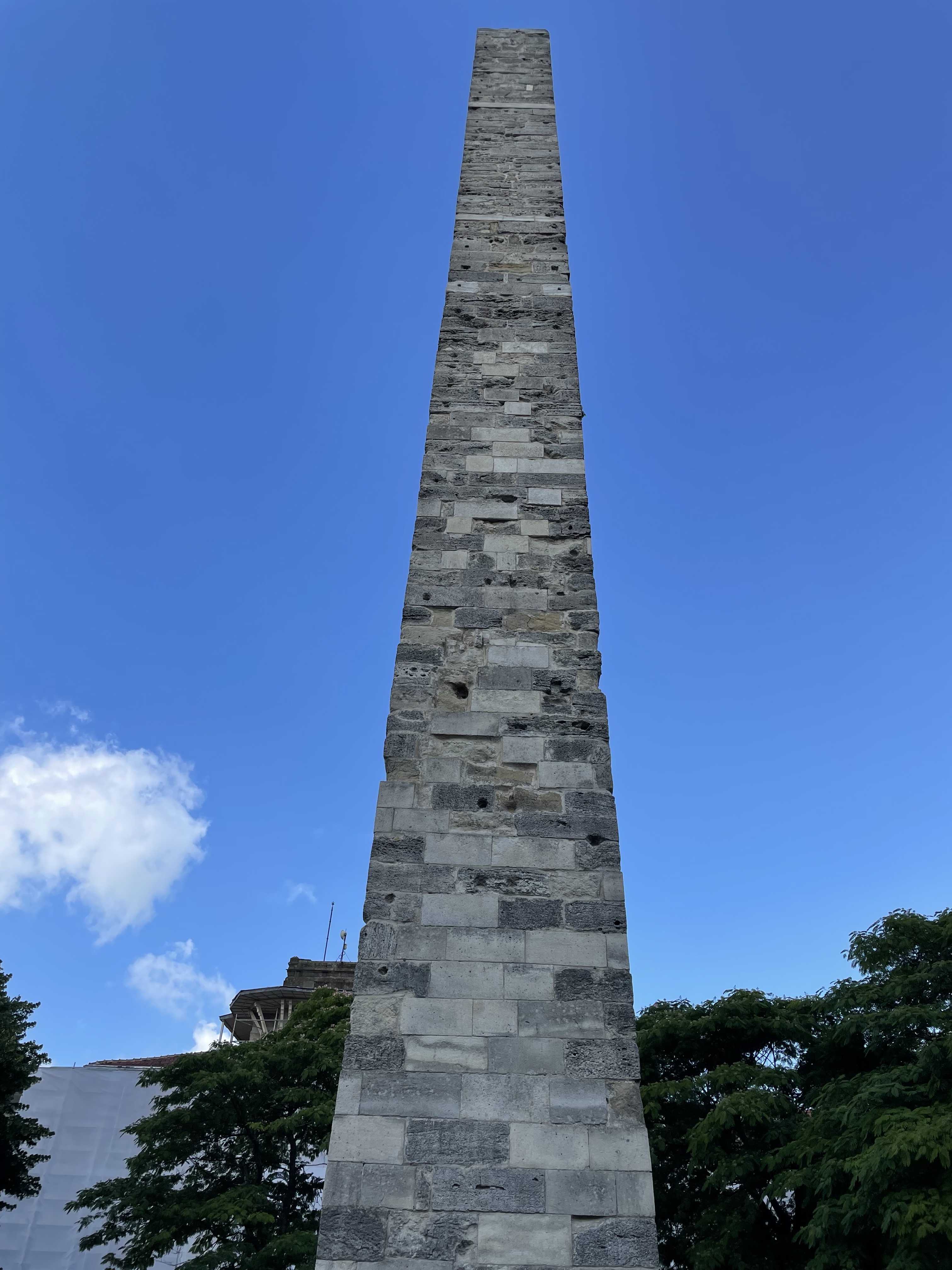
There are very few interesting leftovers of all the spoils of war and invasions that were abundant here, including a monument tower of Constantine that was covered with bronze and emeralds. All that remains is a rather ugly cement column with a lot of divots in it where the bronze had been attached. That bronze was removed to make weapons in the Crusades. Remember the four bronze/copper horses back in Venice? They were stolen from the Hippodrome. Those four horses I found out were originally sculptured in Greece in the 2nd or 3rd century BC, and I’m not sure I knew that when I wrote about them in Venice. I remember saying those horses “got around” but they were busy travelers, those four. Can you understand why I’m so confused all the time about the history around here. Why can’t everybody just get along?
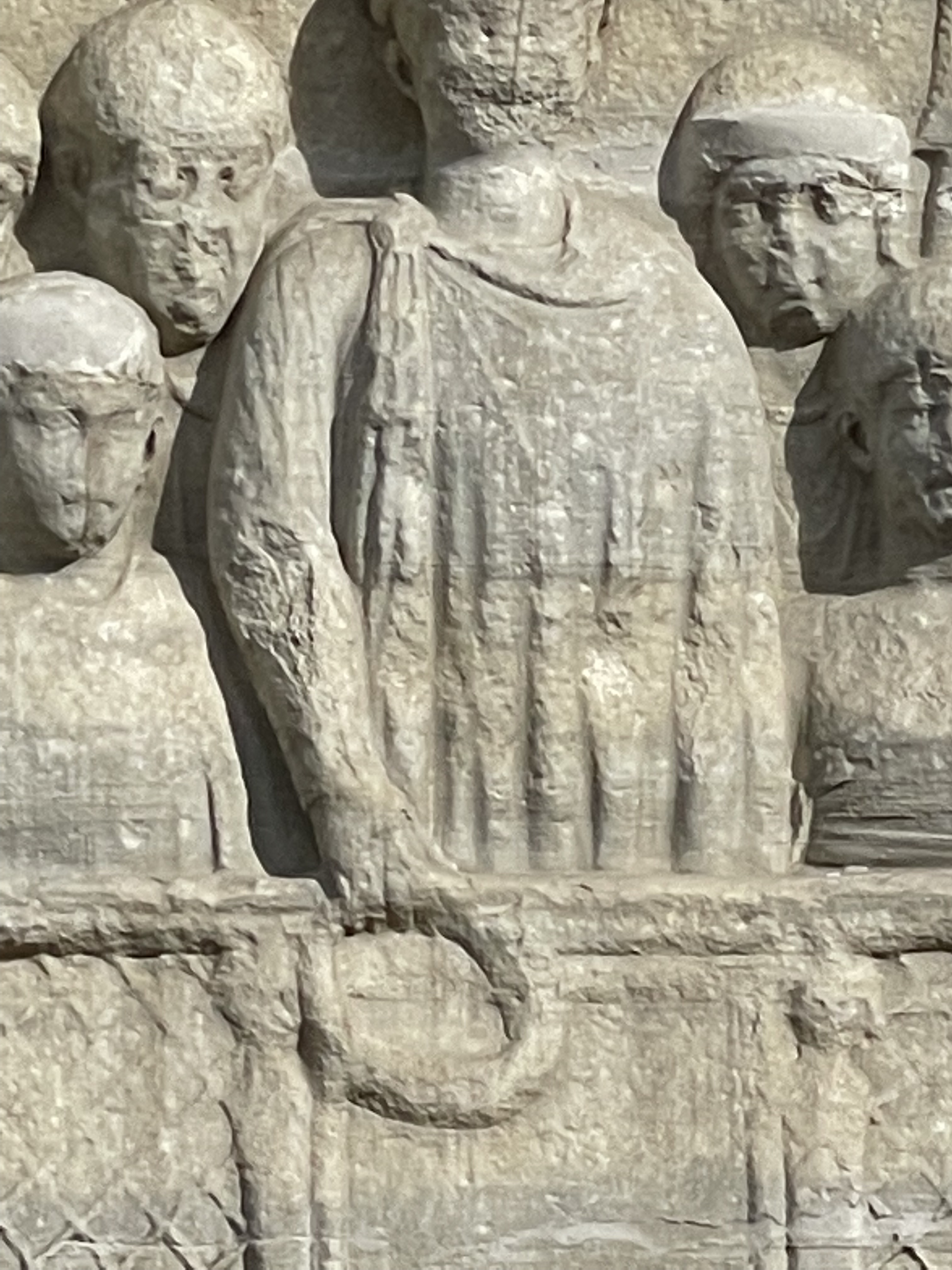
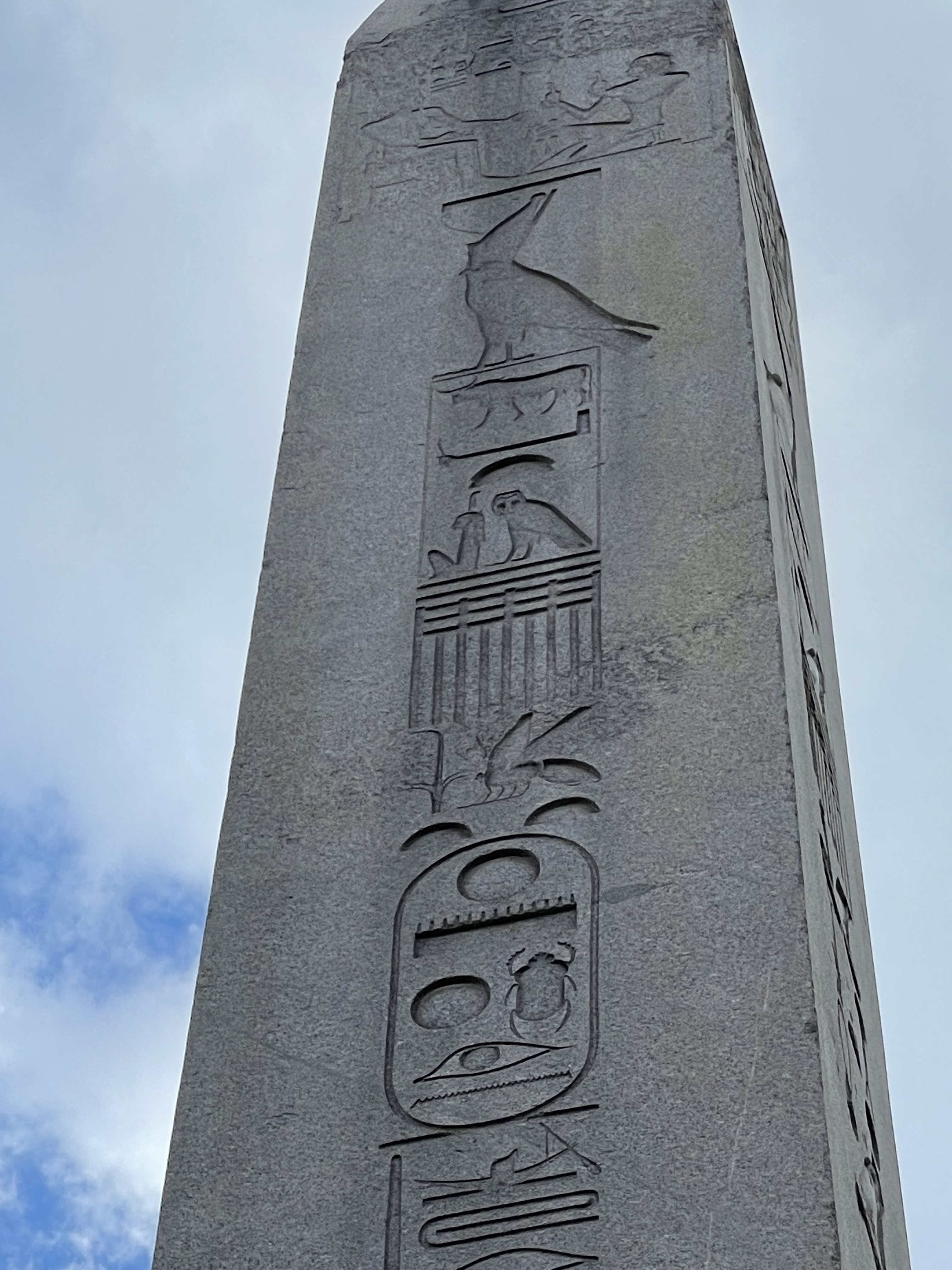
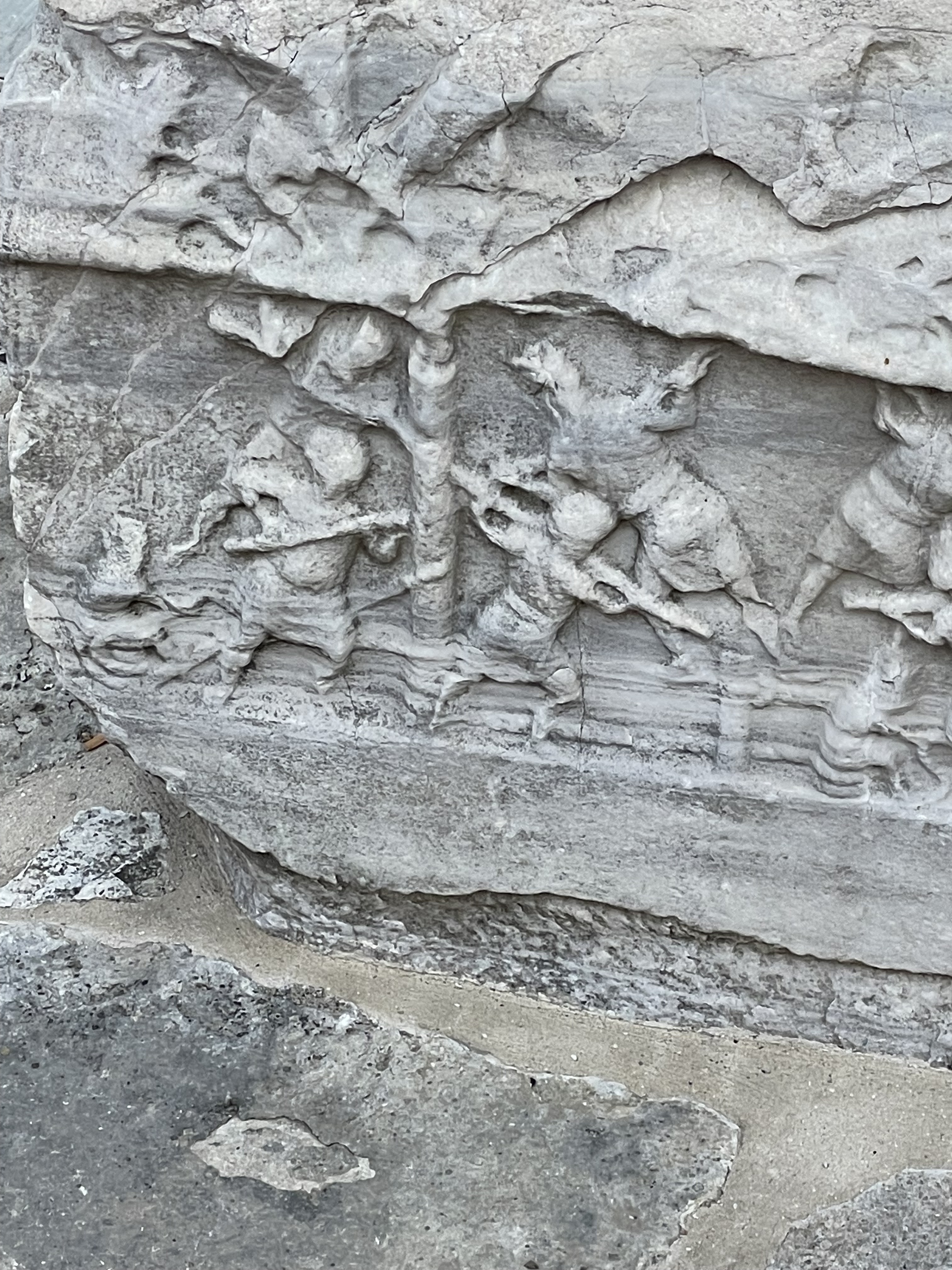
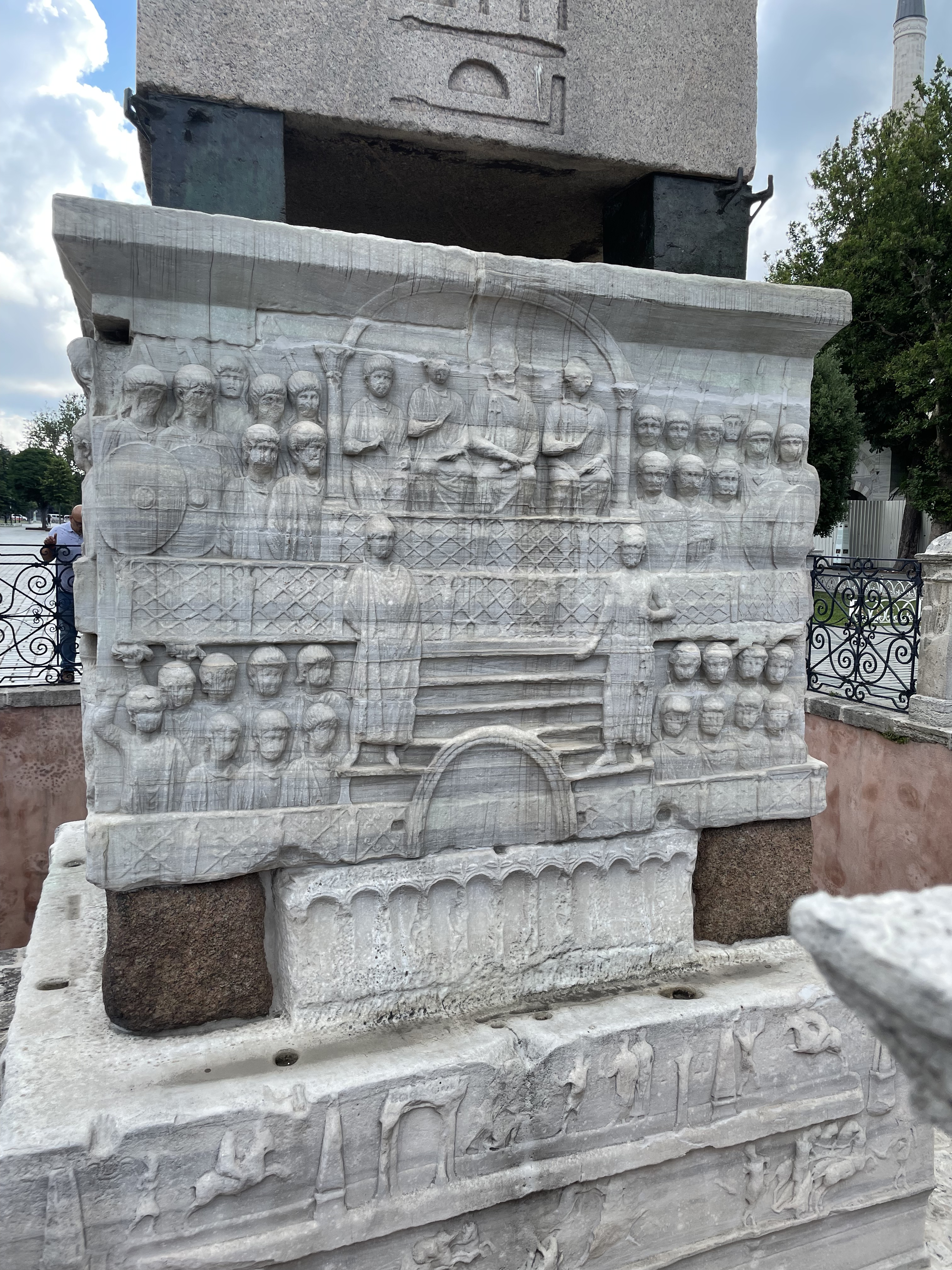
Then there’s the Karnak obelisk (or one third of it) that was stolen from Egypt – in pretty good shape and the photos will show the Egyptian symbols on it honoring Pharaoh Thutmose III. You remember all about him, right? Me neither. It rests on a another monument base that depicts Emperor Theodesius watching the races, holding the olive wreath crown for the victor and the coolest thing is one of the sides of the base shows the obelisk on its side and then people using pulleys to get it upright. At that point I did ask my question of the guide and got my question answered – how did they MOVE all this stuff back and forth. The answer was as I thought – slaves/aka conquered peoples. Thy will be done was pretty much the way it went down – you want those Four Horses moved to Venice? Ok. Done. I’m starting to be less angry at the British Museum…this stuff just cycles through so “whatever” is probably their stance.
(By the way, in Ephesus we were told by our guide that the slaves of the day were the people of the conquered lands. Most of them were well educated and were often the teachers and sometimes leaders in their new digs)
From there we went on a walk to The Blue Mosque, Hagia Sophia, Topkapi Palace and all kinds of interesting things in between. A quick stop at the German Fountain, notable because the relationship between Kaiser Wilhelm II and the sultan led to them being allies in WW I which didn’t end well for either of them.
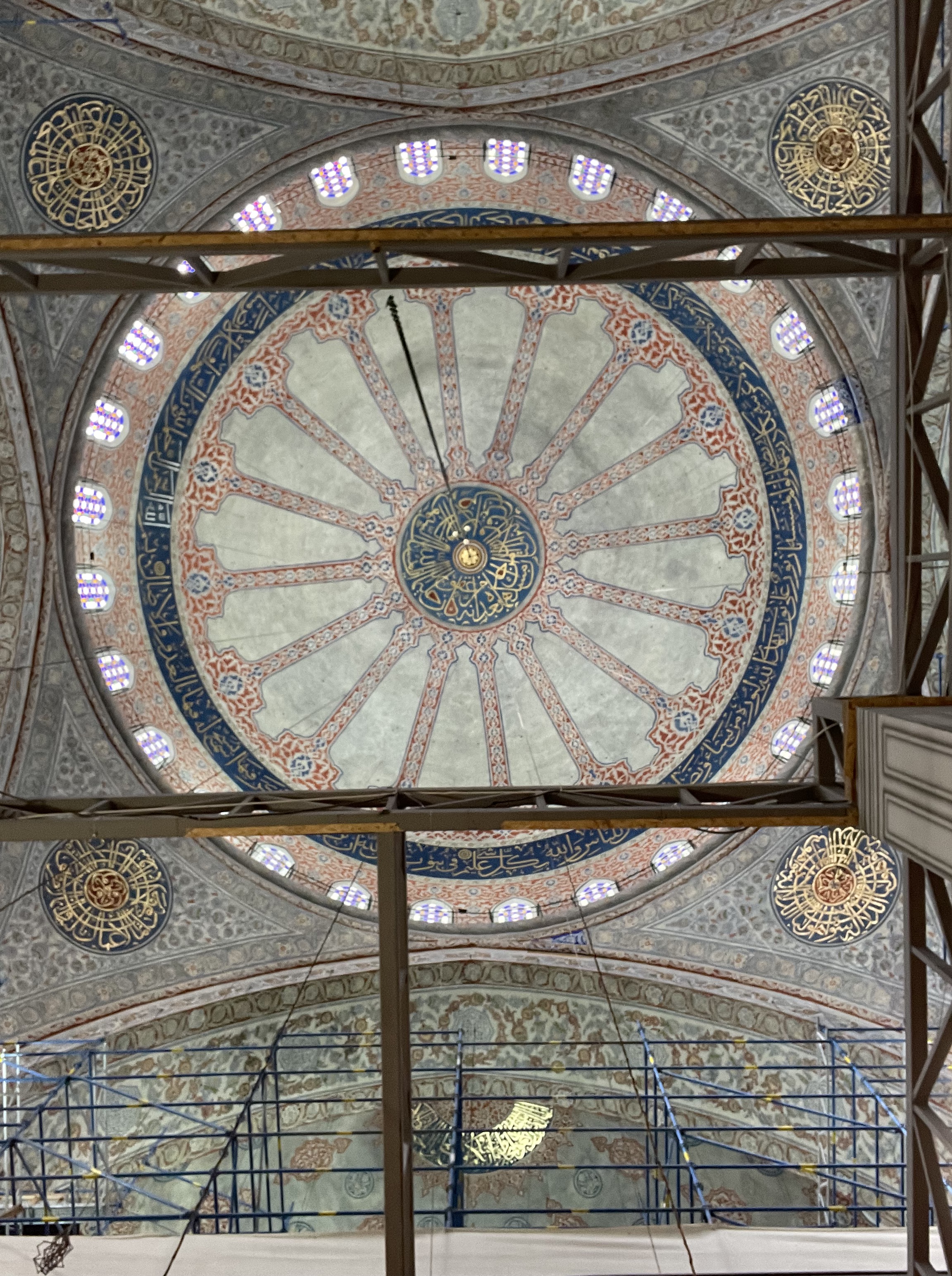
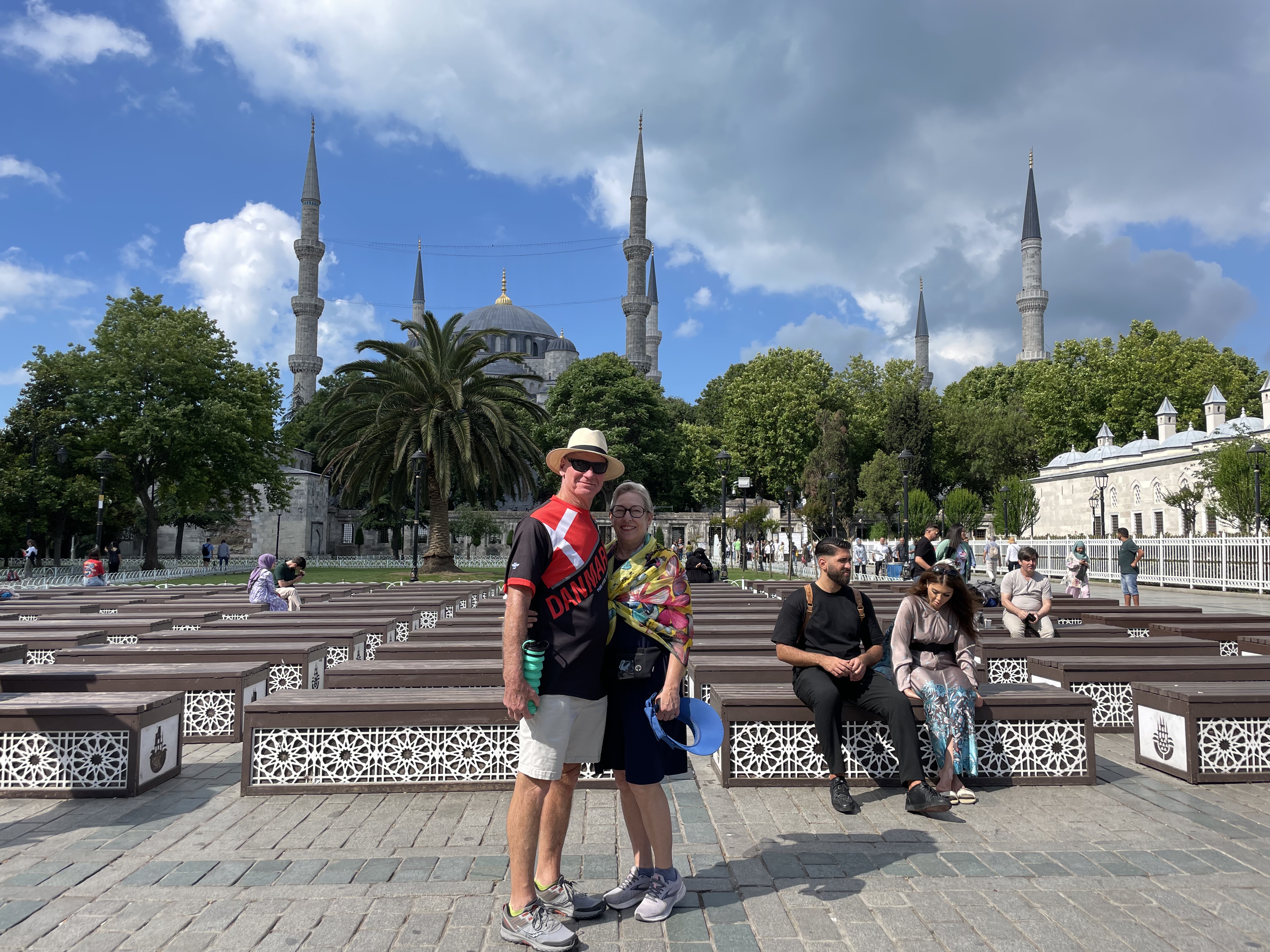
Then on to the Blue Mosque. Of the 3000 (!) mosques in the city of Istanbul it is famous for the 6 minarets and 20,000 Isnak (15century) tiles. Minarets are those tall columns arising from the mosque where imams call to prayer. The call is through loudspeakers now but the imam is still calling in real time from inside the mosque. We heard this in Morocco and again here it is a beautiful and timeless experience to hear. The six minarets caused a bit of a stir. Apparently a reflection of the sultan building it, in this case Sultan Ahmed and they can be fancy but not overshadow the mosque in Mecca. The mosque in Mecca had six minarets. Oops. Mecca eventually added a 7th which solved the problem.
The Blue Mosque is called this because of the exquisite blue mosaics inside. As is common when travelling to see iconic churches wherever you go, even in the US, renovations were underway and the inside of the mosque was unfortunately for us a spider web of scaffolding. Unfortunate because if you look at photos on the internet it is a far cry from what we were able to see, but that’s life. I can’t even post a decent photo of my own of the inside. Considering I didn’t even know it existed until I set foot in Istanbul I can’t complain.
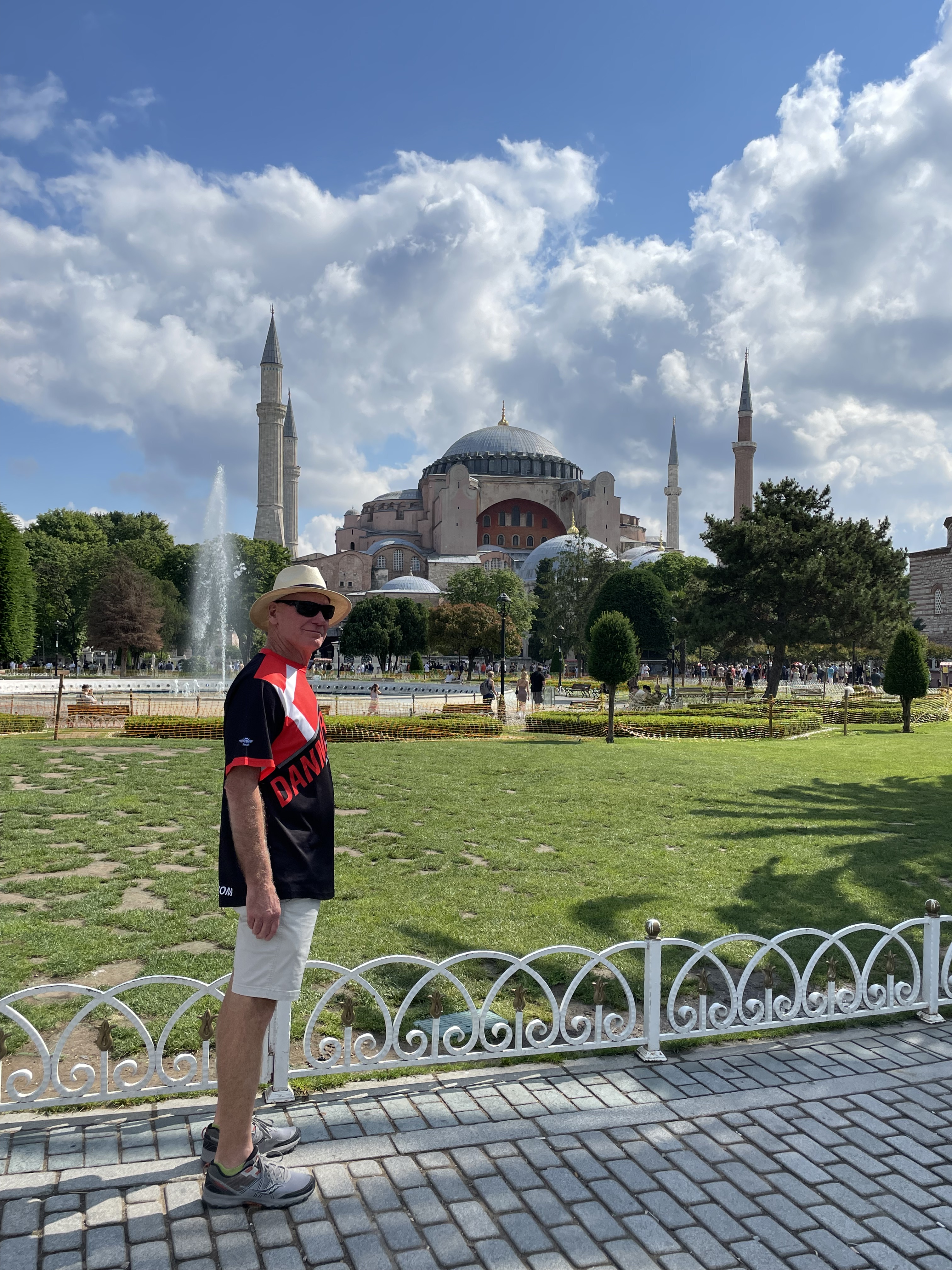
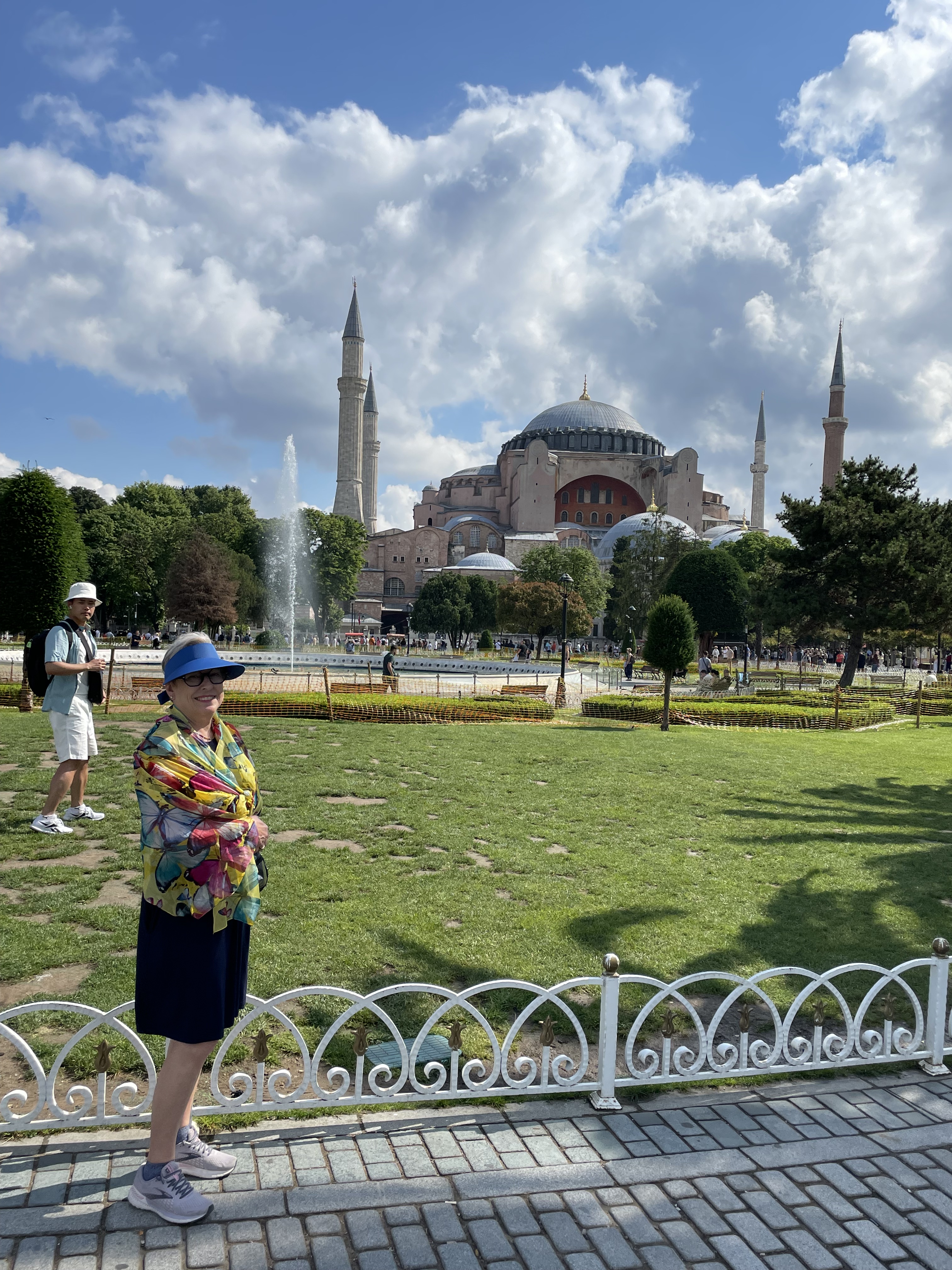
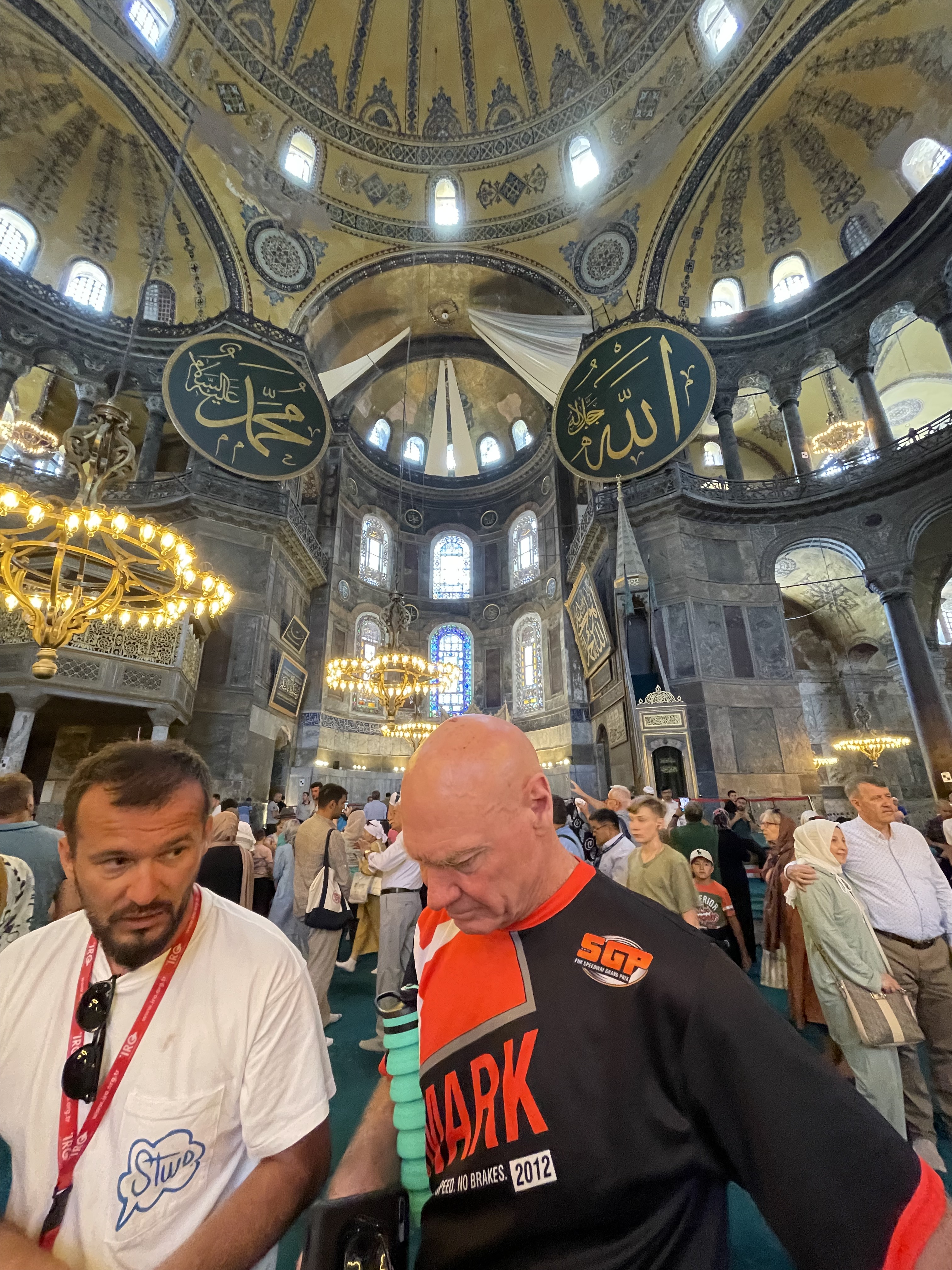
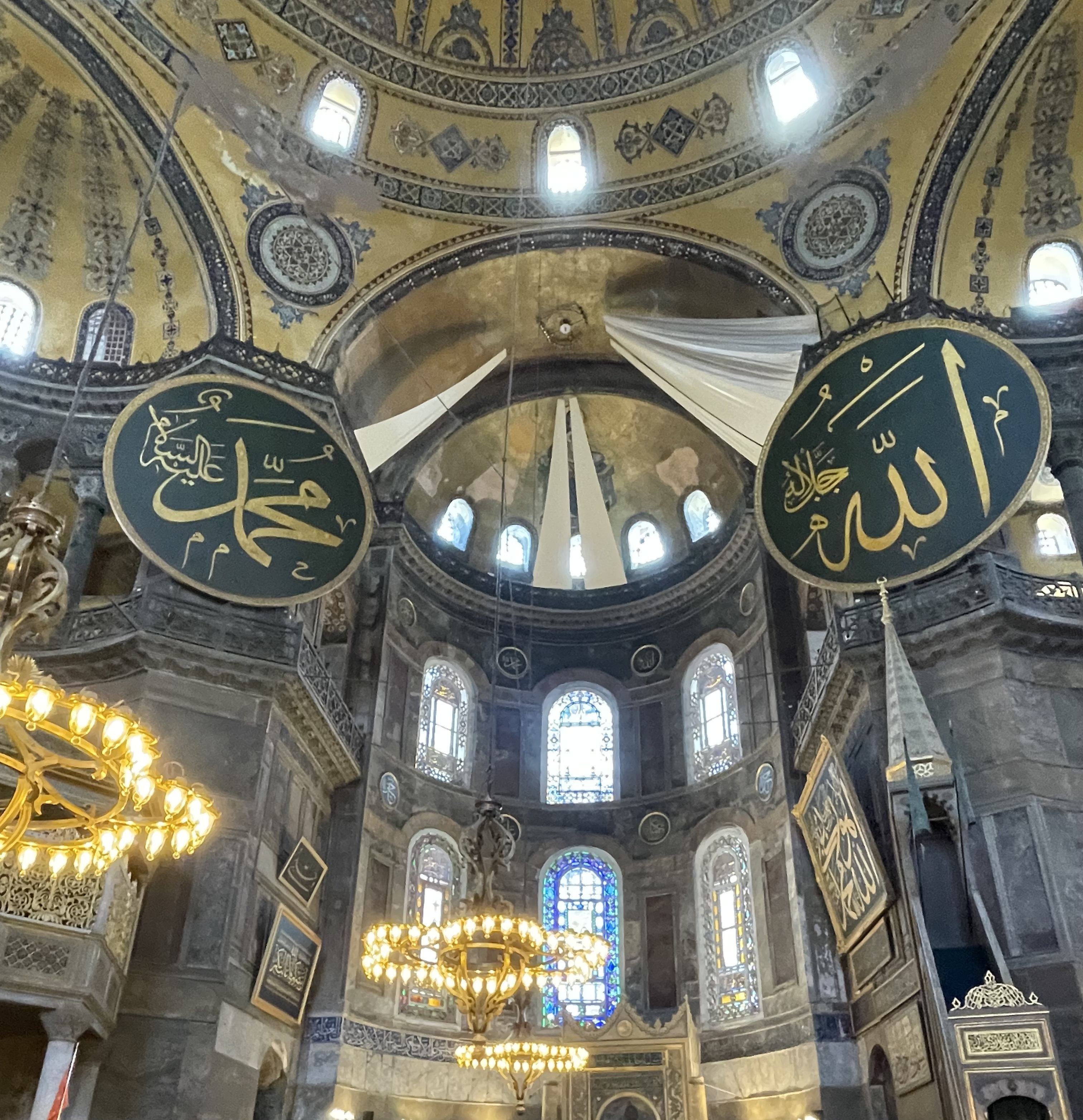
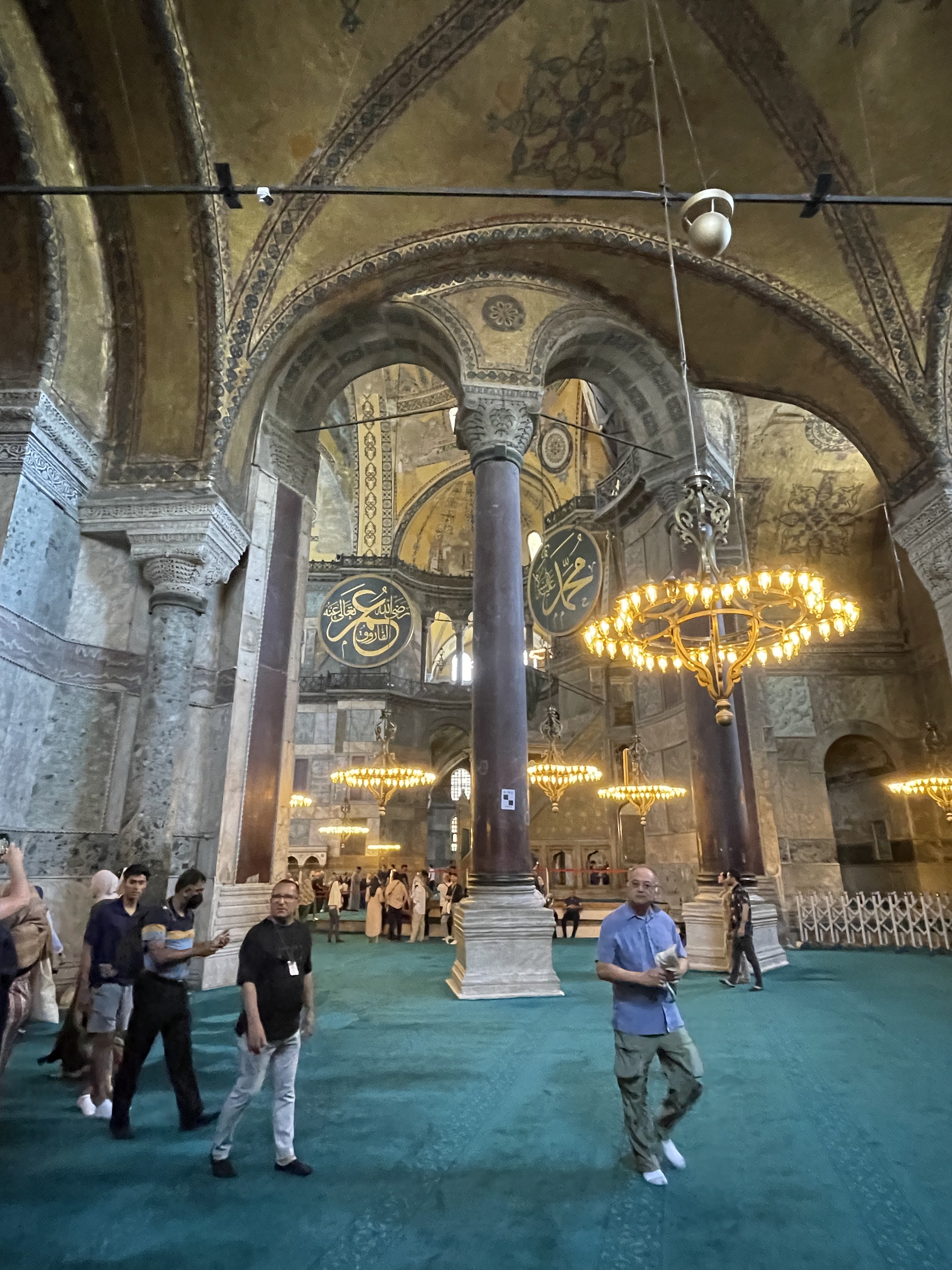
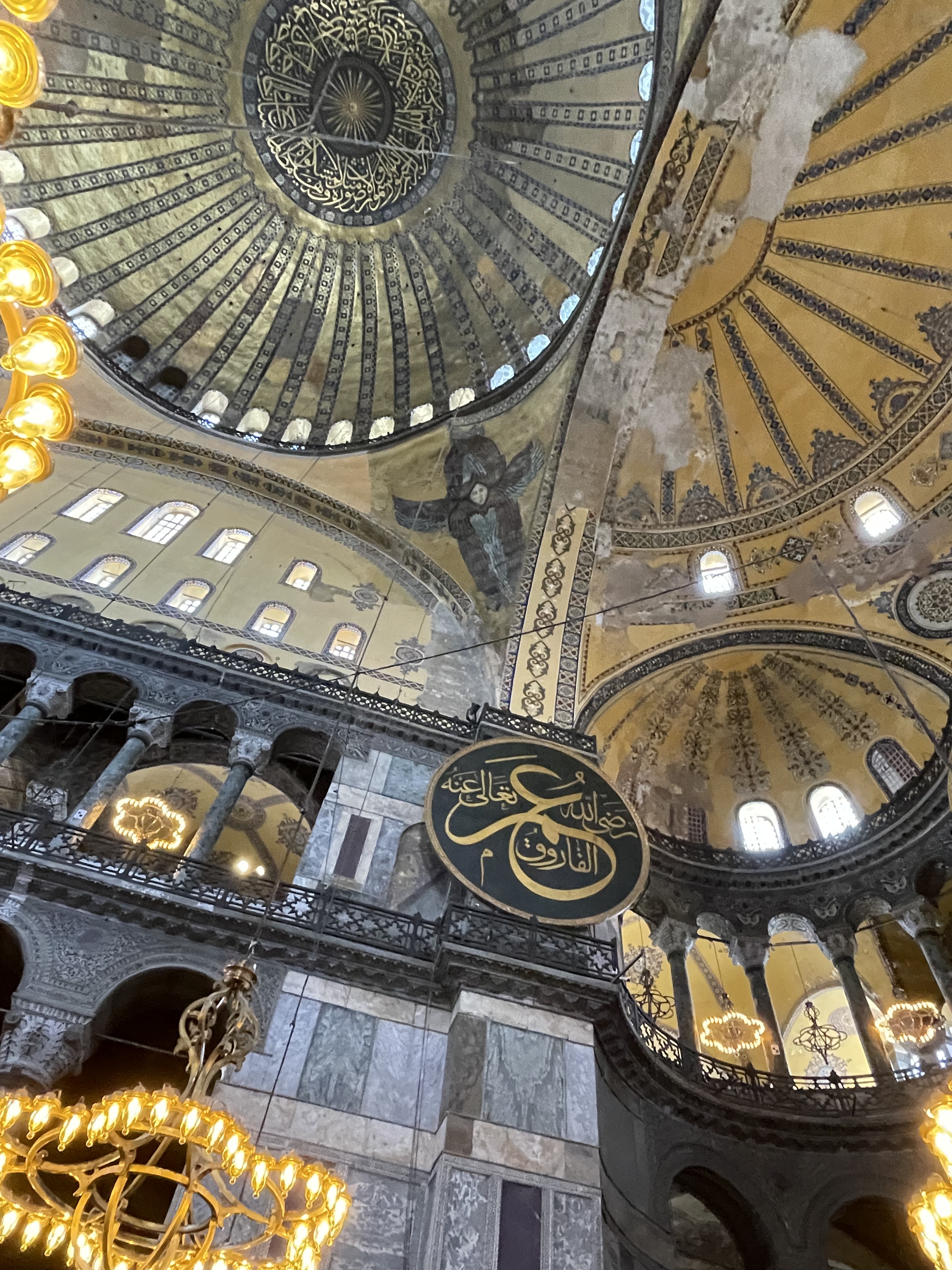
On to the Hagia Sophia. This I did know about. This gem has quite the history, first built as a Byzantine Catholic Cathedral that was the eastern counterpart to the Vatican in Constantinople (new Rome). After the Ottomans dragged their ships over the mountain and took over the city, it became a mosque. It was a museum for a while after the Turkish Republic was established, but in 2020 it became a functioning mosque again. There are political reasons for this and when I asked the guide if the people of Istanbul find the resurgency of fundamentalist Islam (and President Erdogan who thinks he should keep being “elected” is desirable) rather concerning he replied “Yes, we are scared”. He started to give me a history lesson about how Iran used to be a free country and women held office and high positions in education and I had to admit to him that not only do I know that, but I REMEMBER it. A quick internet search reveals I have not been paying attention to all this. When we were in Hong Kong maybe 8 years ago, even though the UK had let its lease expire, it was still impossible to fathom that the cosmopolitan, open city we visited could ever be truly under China’s thumb again, but here we are.
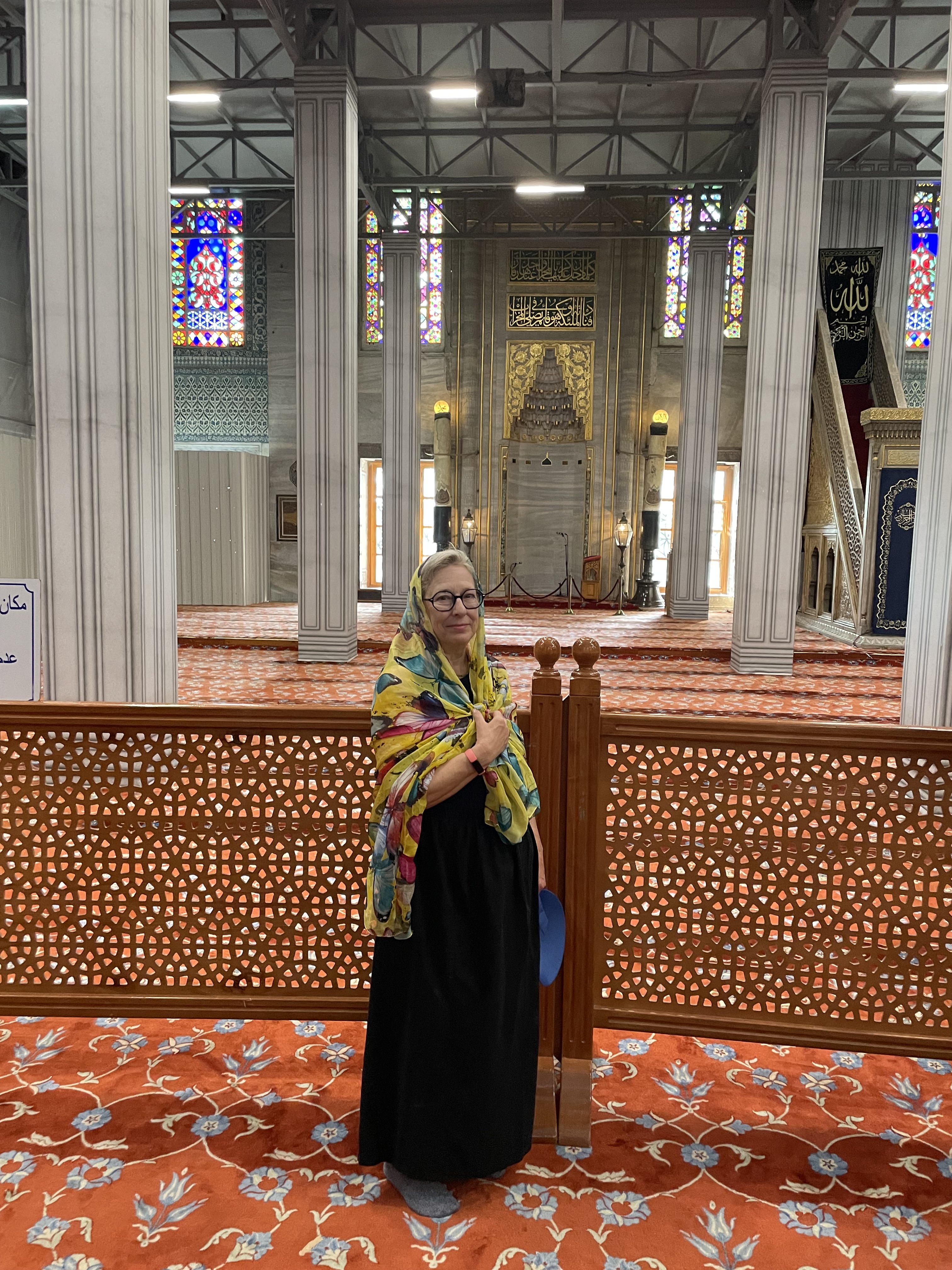
As in Morocco, most of the women in Turkey are relatively free and wear Western dress, but we also saw many, many women, young women with babies, old women and in between, wearing full burqas in Istanbul. Entering into the Blue Mosque I thought I was okay wearing a mid-knee length dress with a scarf around my arms, but was instead handed a long black skirt to put over myself. I expected to cover my arms but was surprised that my calves were also too risqué.
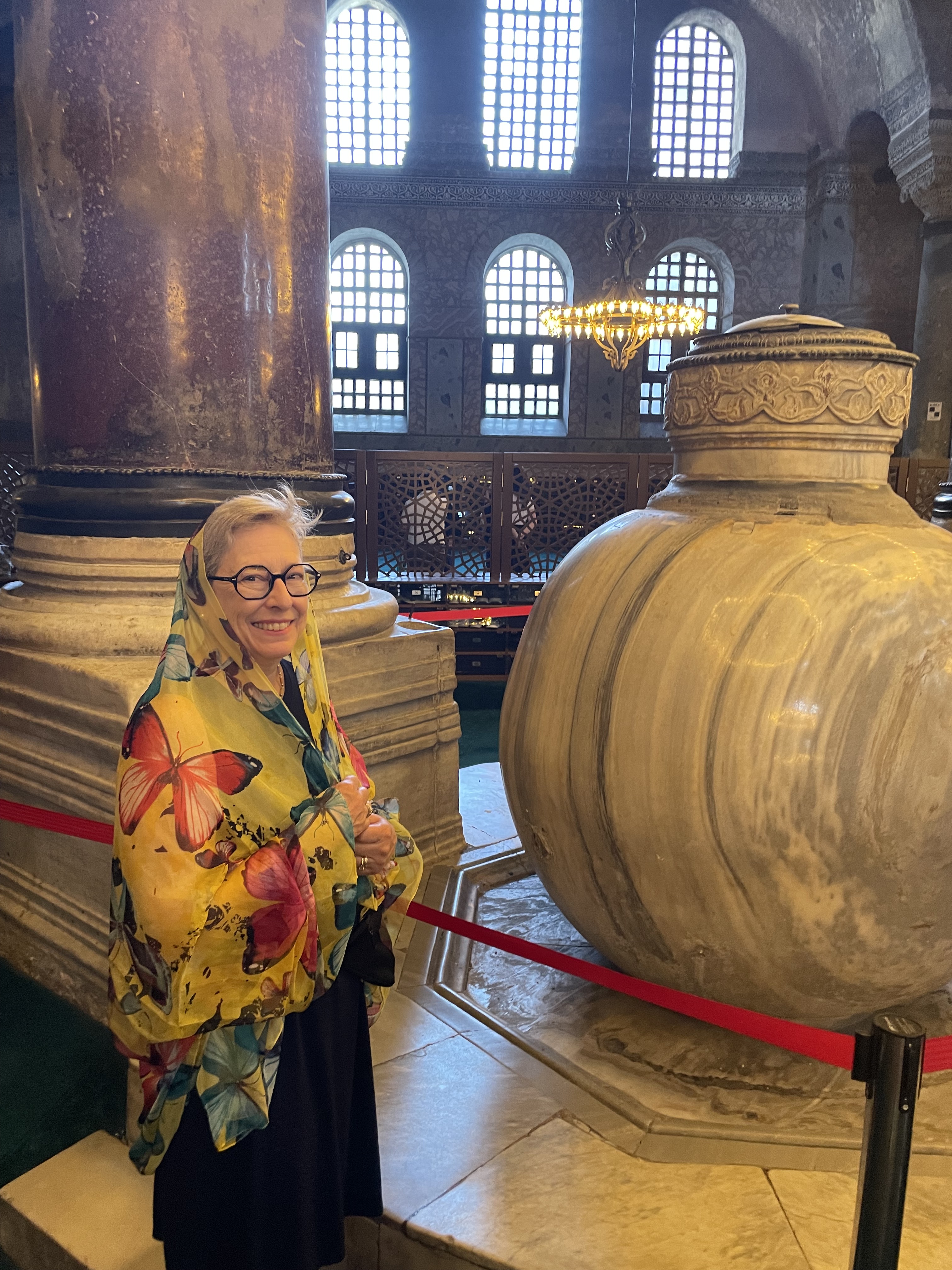
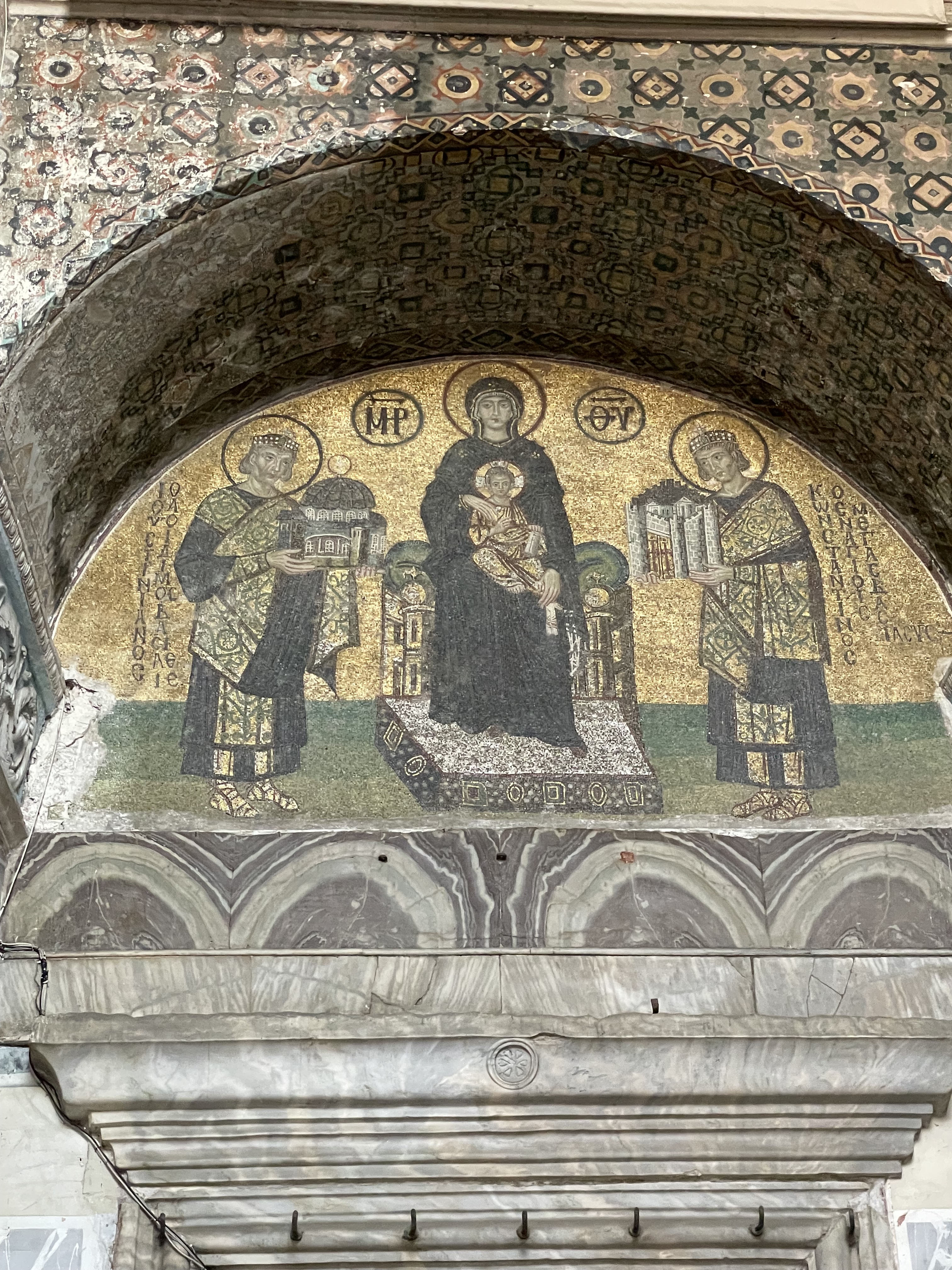
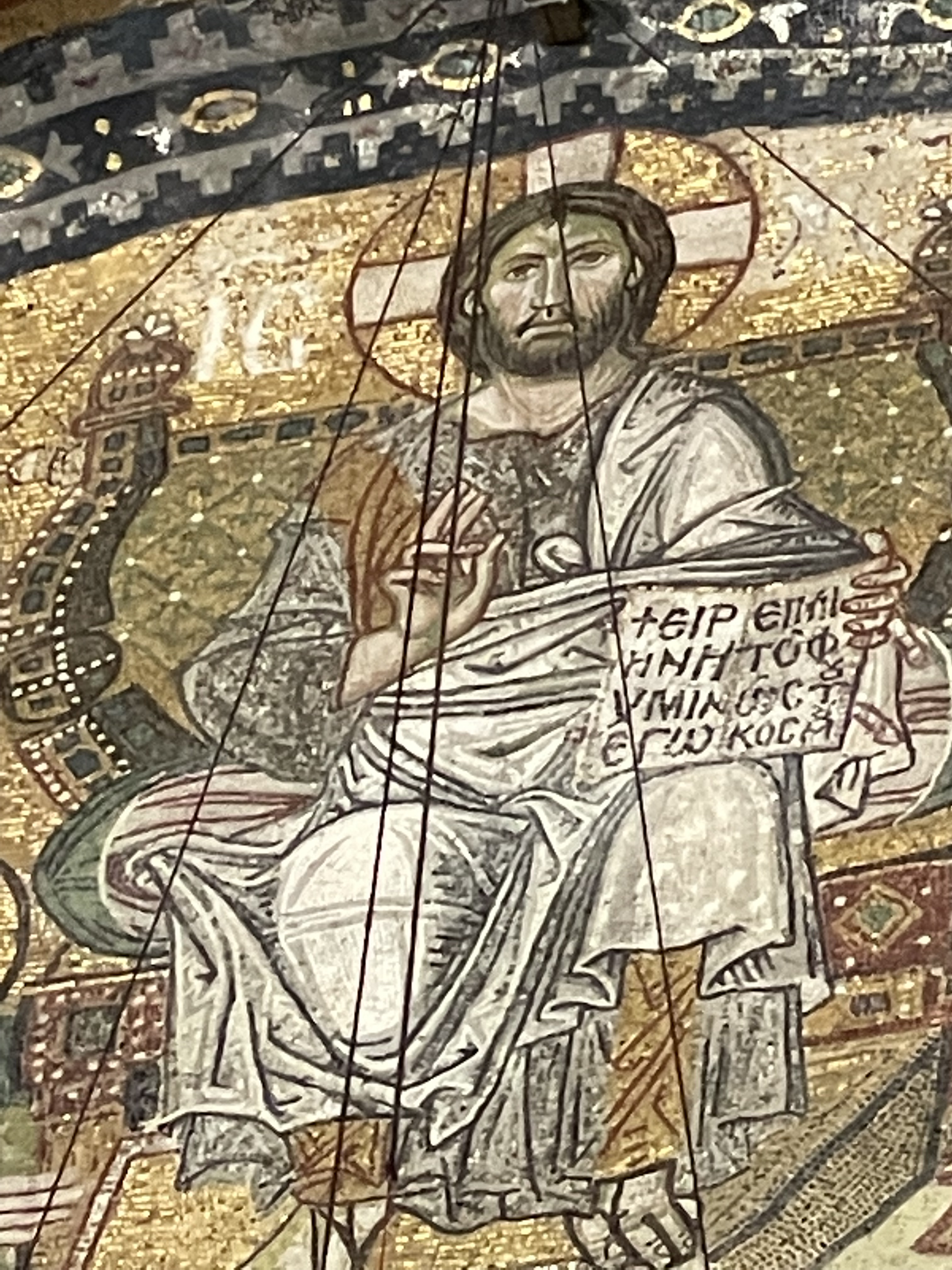
Hagia Sophia, an architectural wonder, a religious and political enigma, did not have ready- to-wear skirt for me (you could buy a paper cover) so I fudged it and managed to drape my huge scarf around both my head and calves. I am including a link to information on the mosaics inside the mosque as it is convoluted. It has not always been so that the Christian images were covered but then they were plastered over and mosaic-ed over then they were recovered and now that it has been converted into a practicing mosque again – who knows? https://www.thenationalnews.com/arts-culture/art/a-look-at-the-mosaics-inside-the-hagia-sophia-they-tell-a-layered-and-important-history-1.1050244
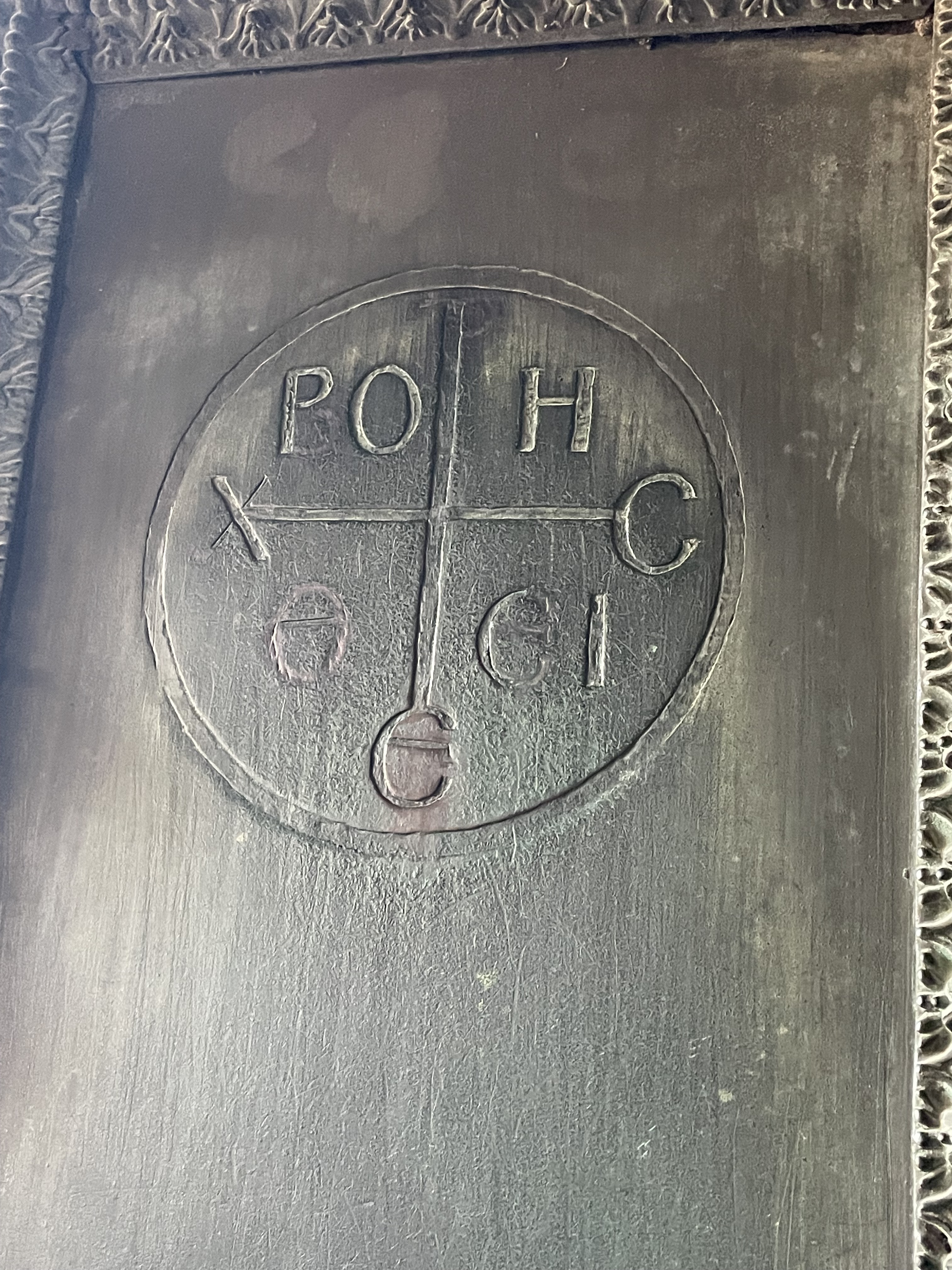
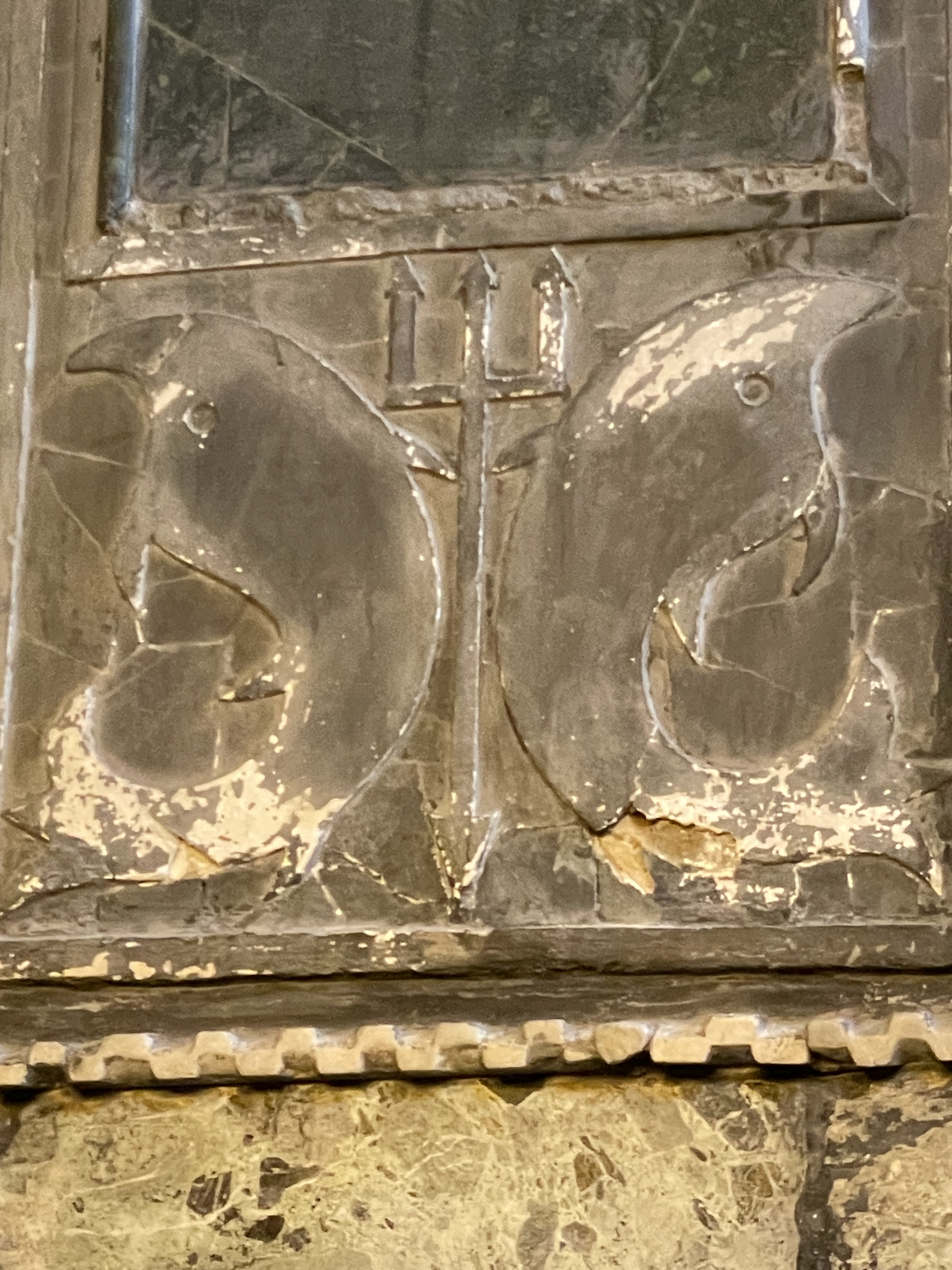
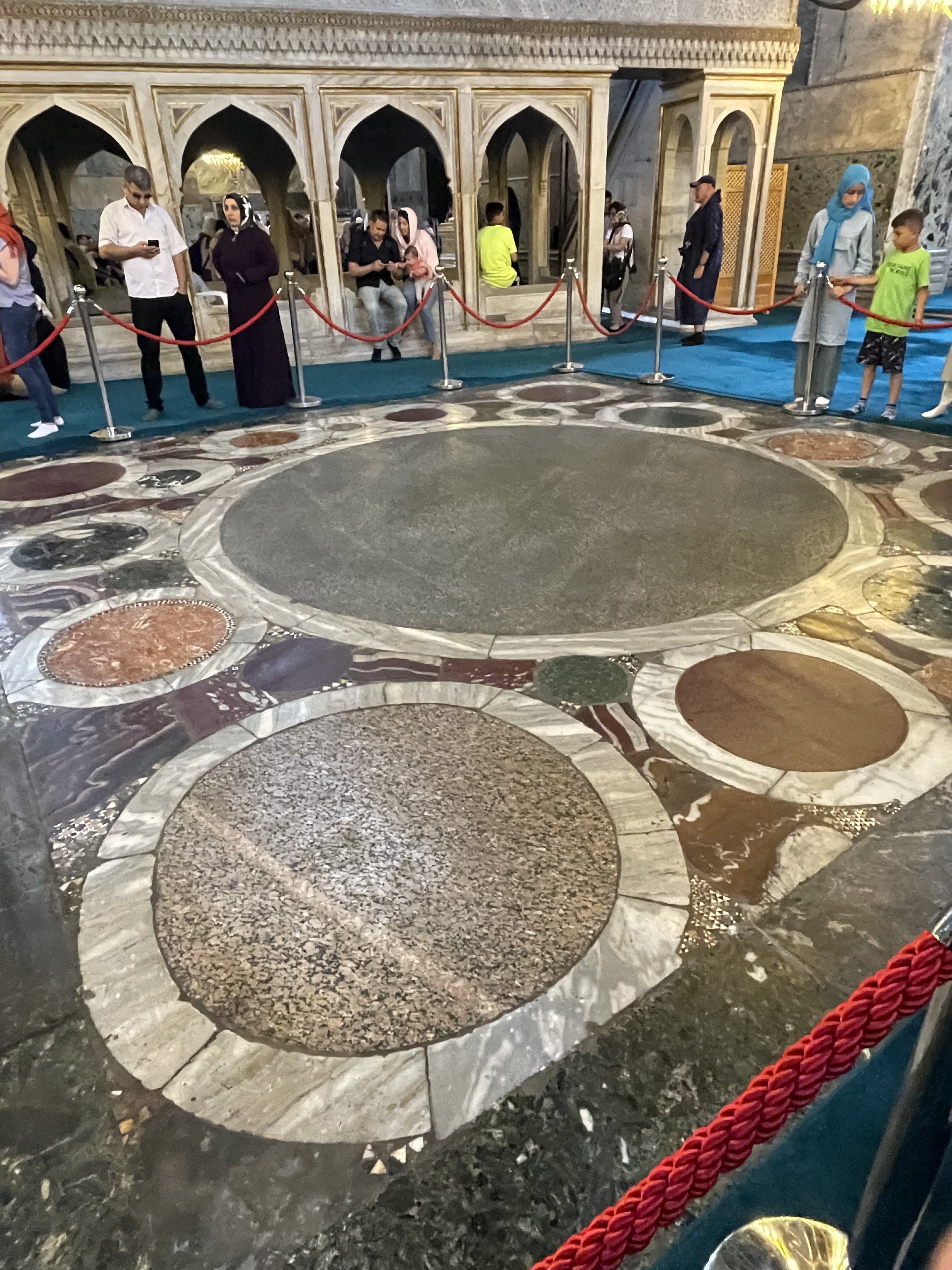
I realize how deep my Catholic roots reach into me because even though I don’t practice anymore and have seen in my travels the evil that “religion” can wreak on the world, from the mythology of the Greeks to the Crusades to the fundamentalism of religions worldwide today, I felt (not thought, there is a difference) a sort of queasiness in Hagia Sophia. It bothered me to see the some of the icons of the religion of my ancestors covered. I think even more than religious affiliation, is it because they are art, they are history. Remembering the ancient Buddhas in Afghanistan that the Taliban destroyed back in 2001, I feel the same sense of deep sadness. Perhaps this is part of the melancholy that Orhan Pamuk refers to as he describes seeing the Istanbul of his ancestors reduced to secular tourism. At any rate my photos give some representation of the cultures that waft through this great building. There is a photo of me in front of Greek “jugs” that are bigger than I am. They were carved out of a single piece of marble, I kid you not. They held wine and you can see the spout hole on the side. I think the guide said they hold water now or maybe oil. Another interesting feature: the Omphalos. Big ol’ marble circles on the floor of different color marble (once again my quilting brain went into overdrive) mark the spot where Byzantine emperors were crowned? Maybe. Over the years, like the mosaics, it was covered by carpets when the Ottomans took over and now it is not. Not a lot of evidence that it was the coronation spot except maybe one guy.
Hagia Sophia – means Divine Widsom. It is a Muslim mosque but not only has vestiges of Christian religion, it has Greek, Jewish and Pagan touches as well. Would that we all had that wisdom, eh?
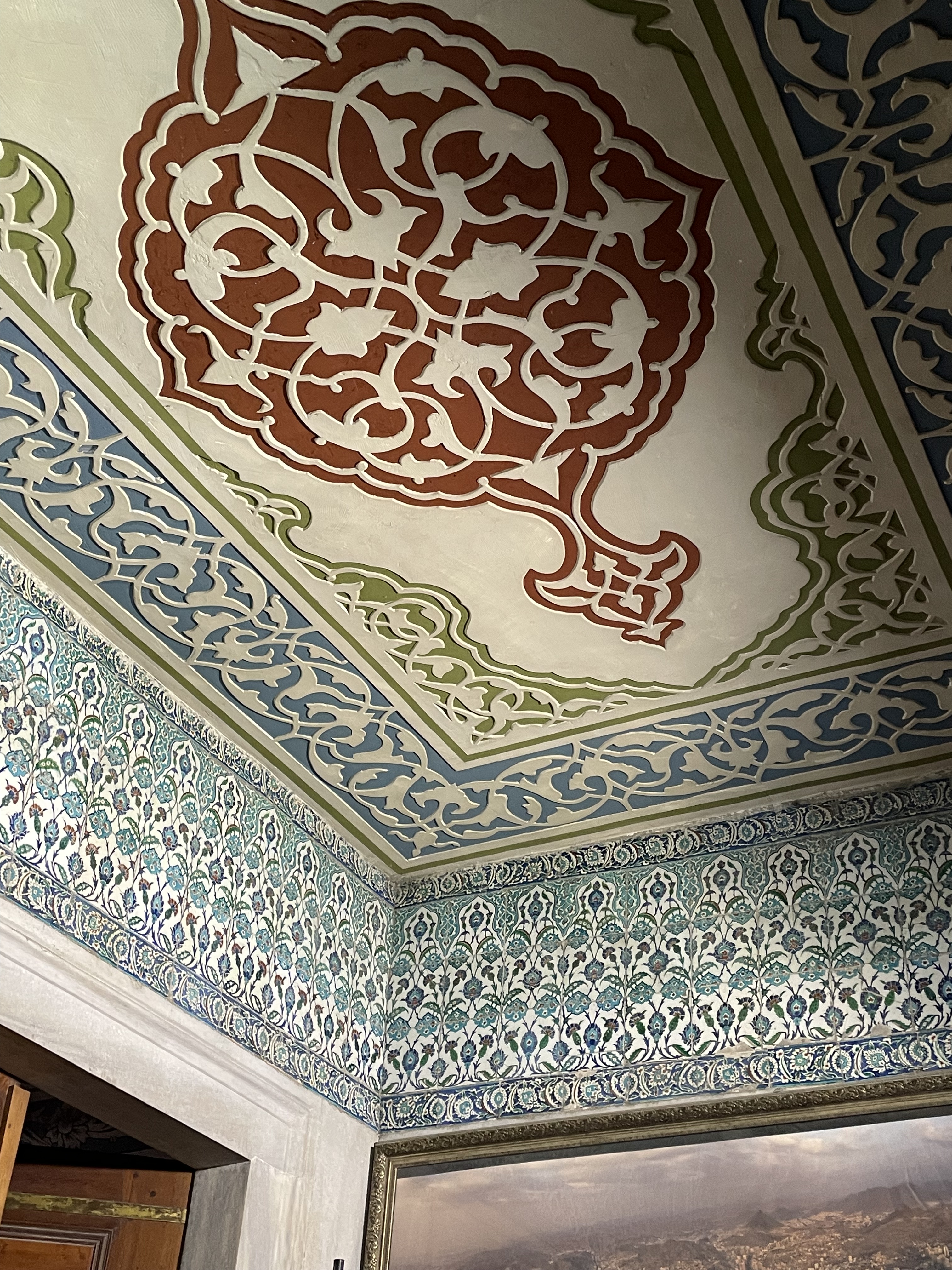
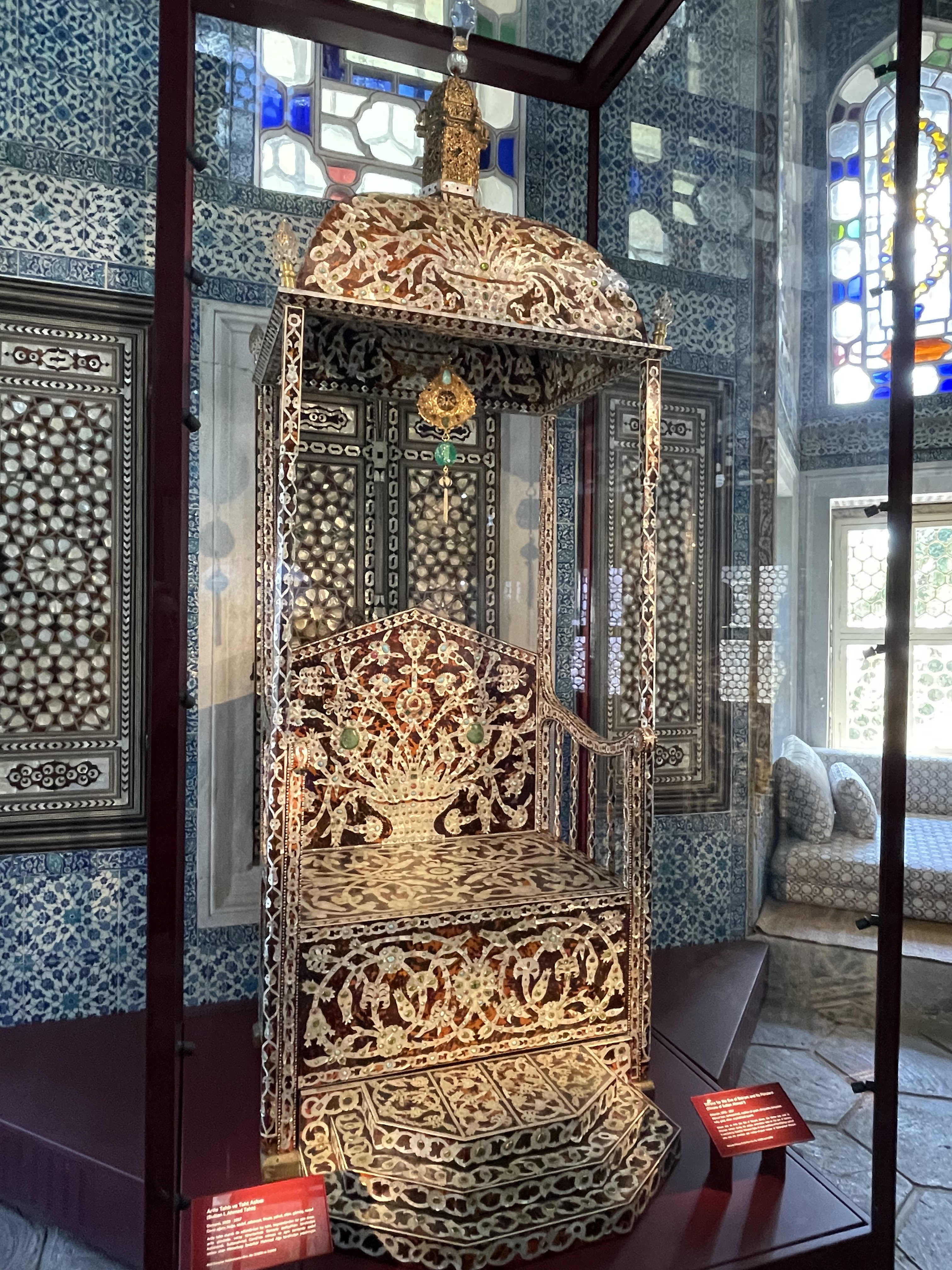
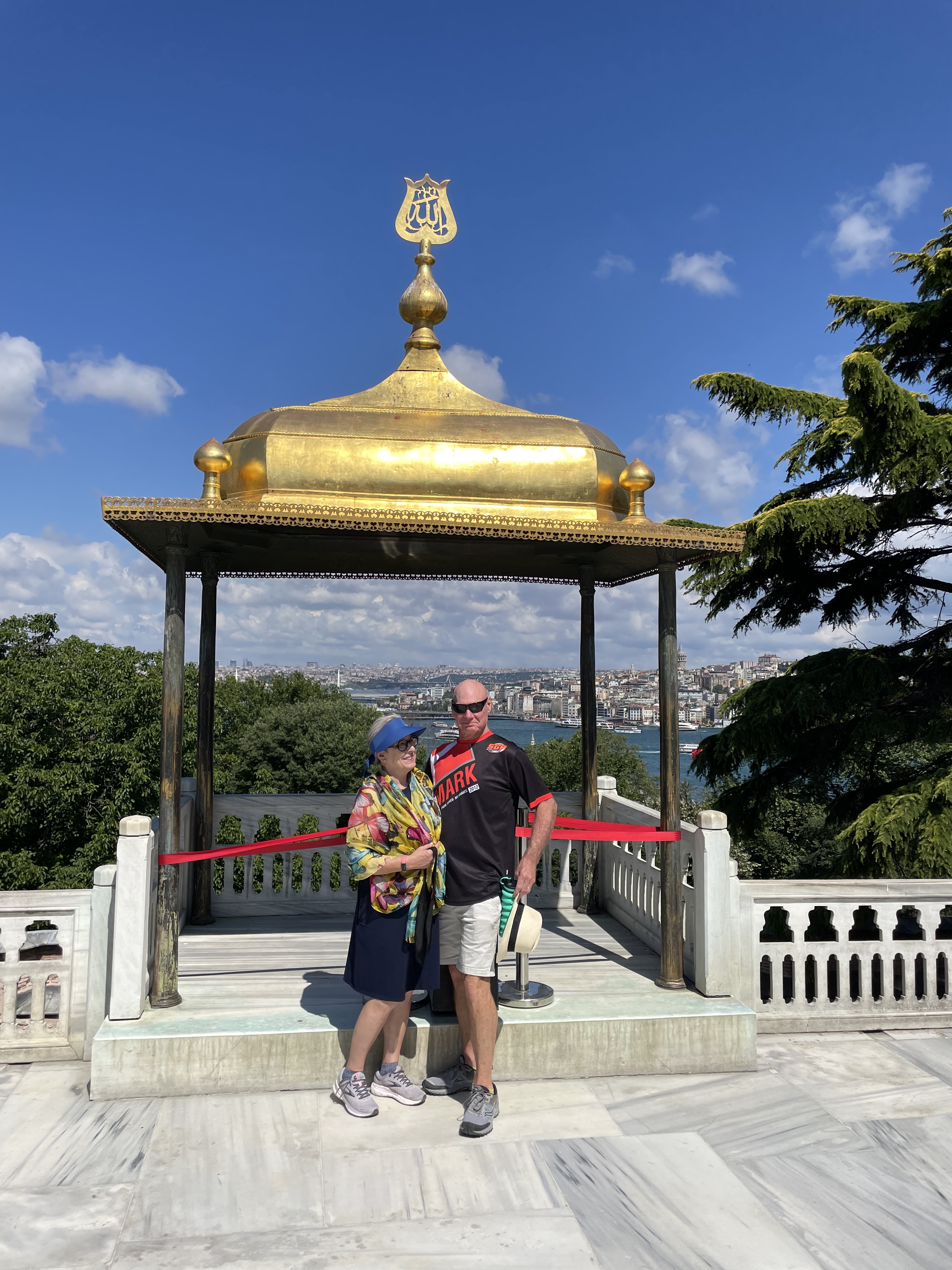
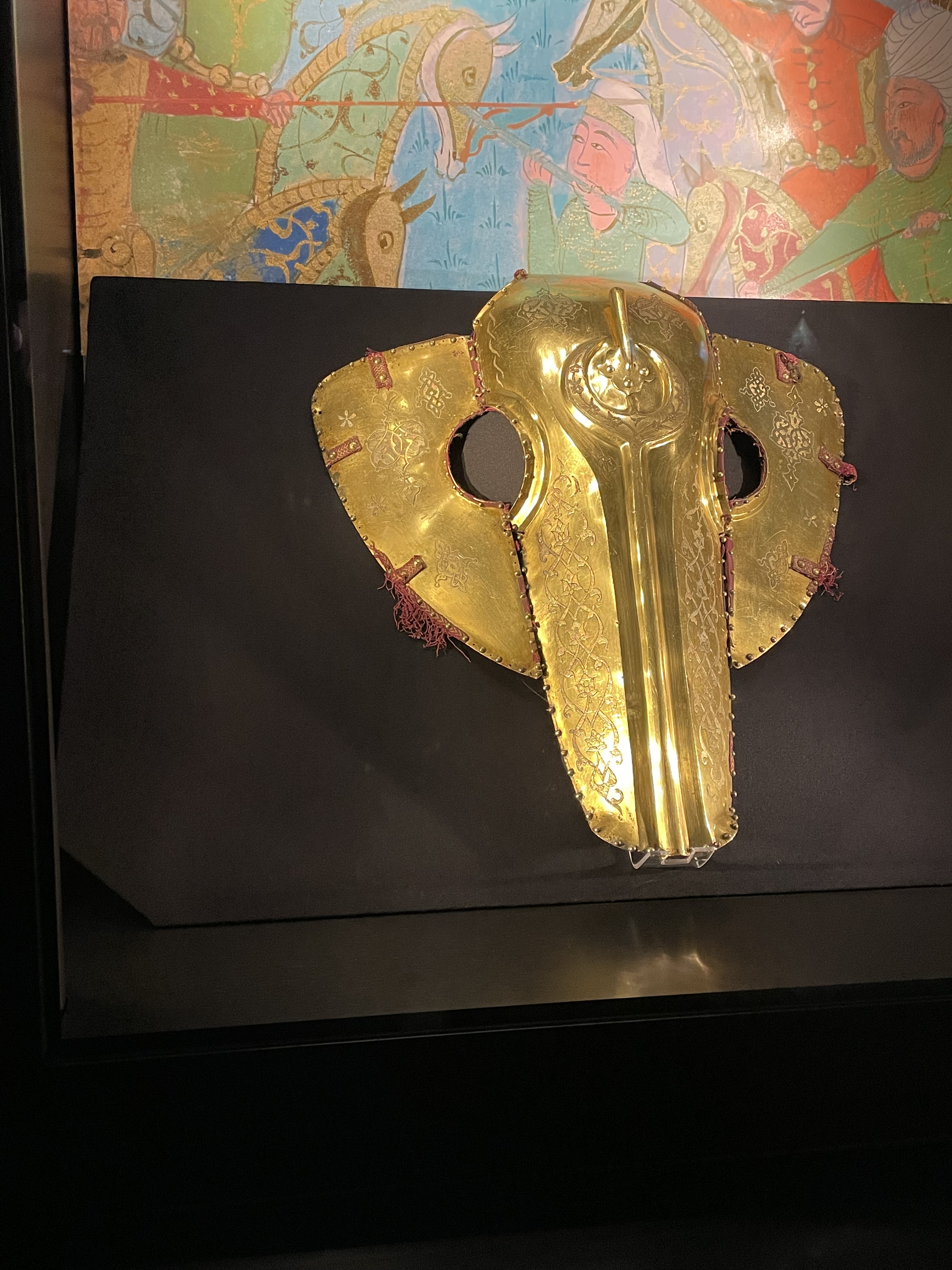
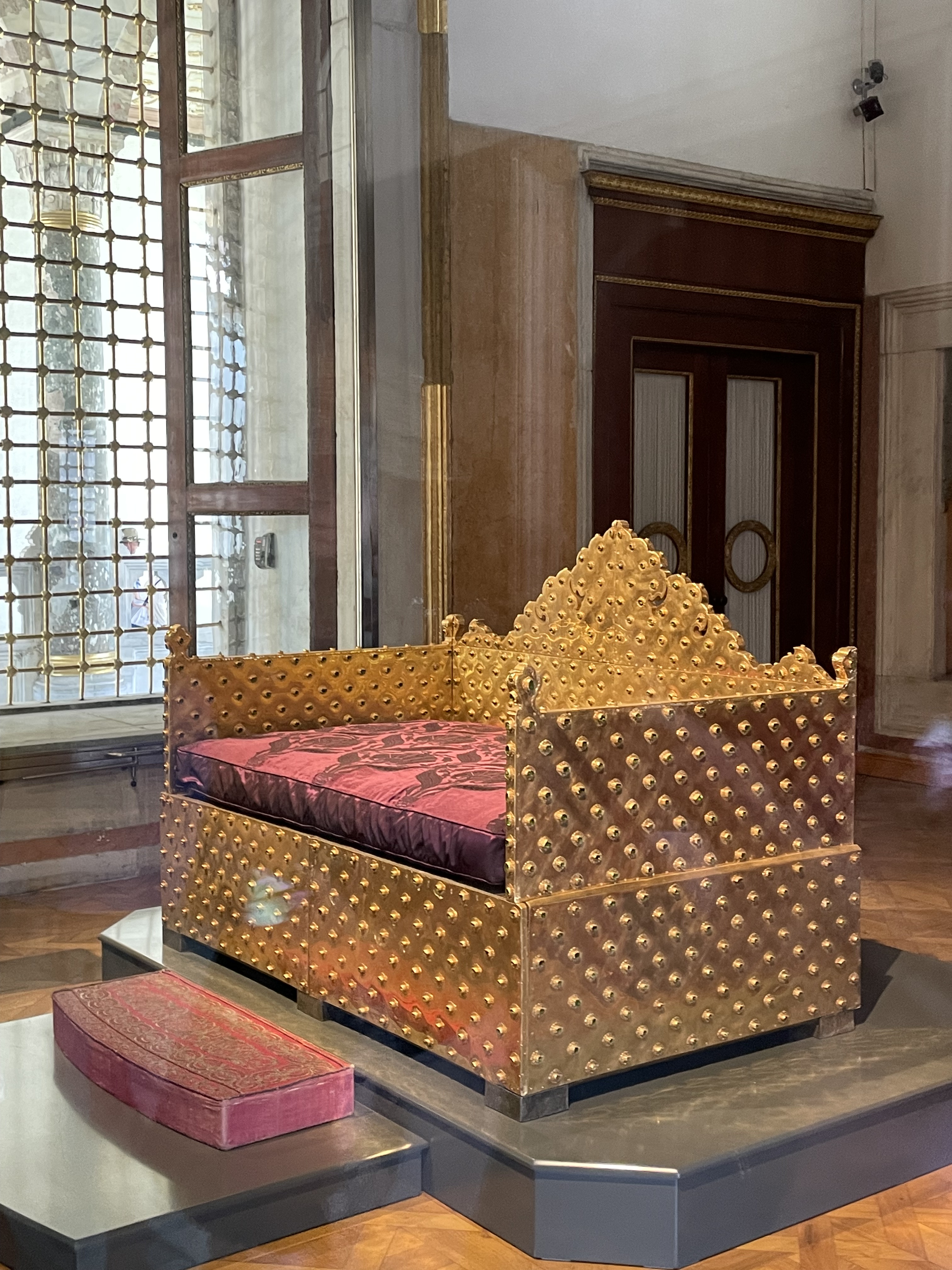
The crown jewel of our tour was the Topkapi palace, home and offices of the Ottoman sultans for four centuries beginning in the 15th century and reflects the power and wealth of the same. It is huge and so I get a little blurry on what was what when I look at my photos. It is for that reason I am again including a link to the museum itself. I start to think I am getting lazy until I look at the layout map of the museum and I realize I should cut myself some slack. It would be like trying to describe the whole of the Vatican in Rome in a blog. Not happening. So here you go, https://muze.gen.tr/muze-detay/topkapi
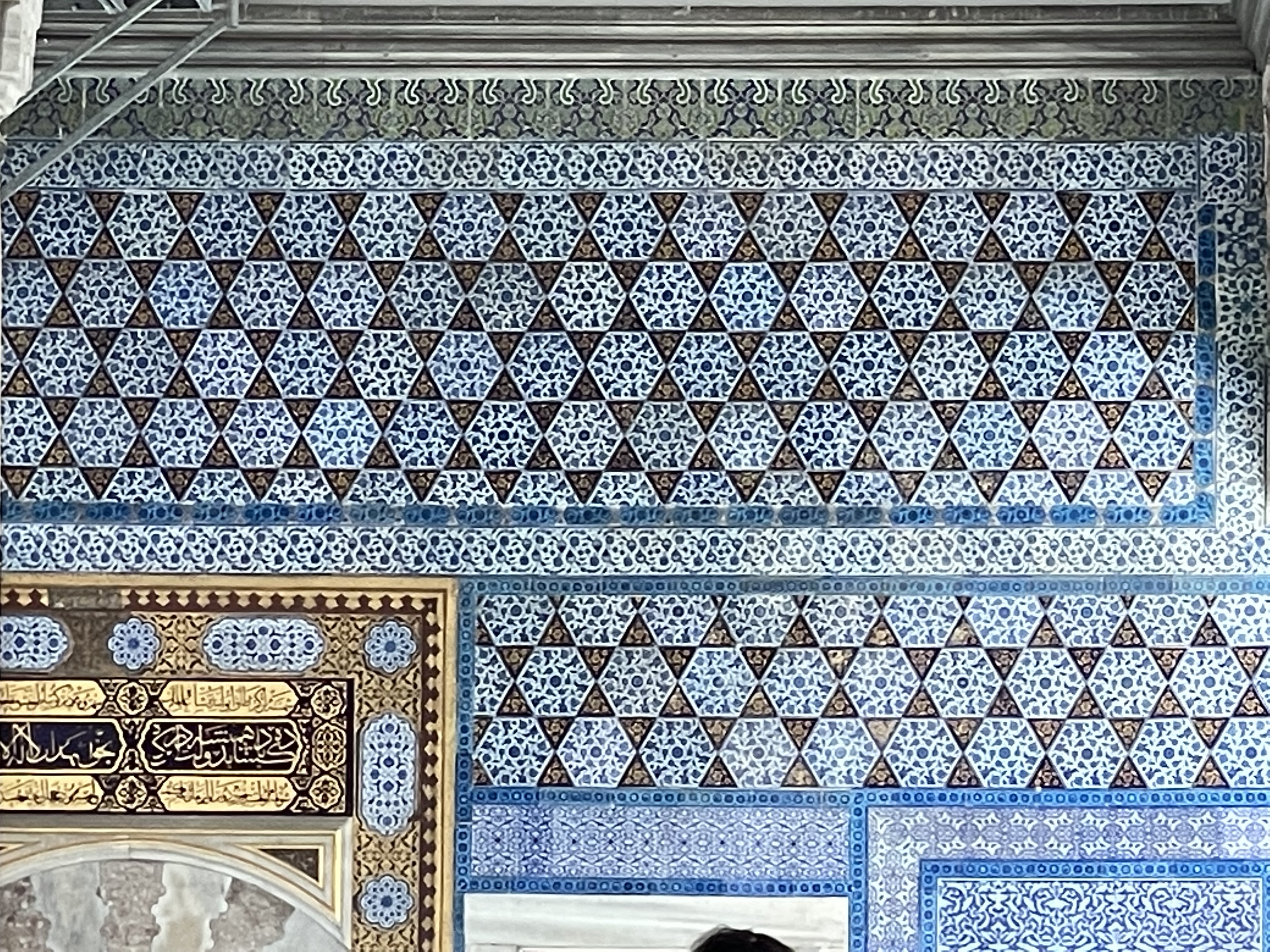
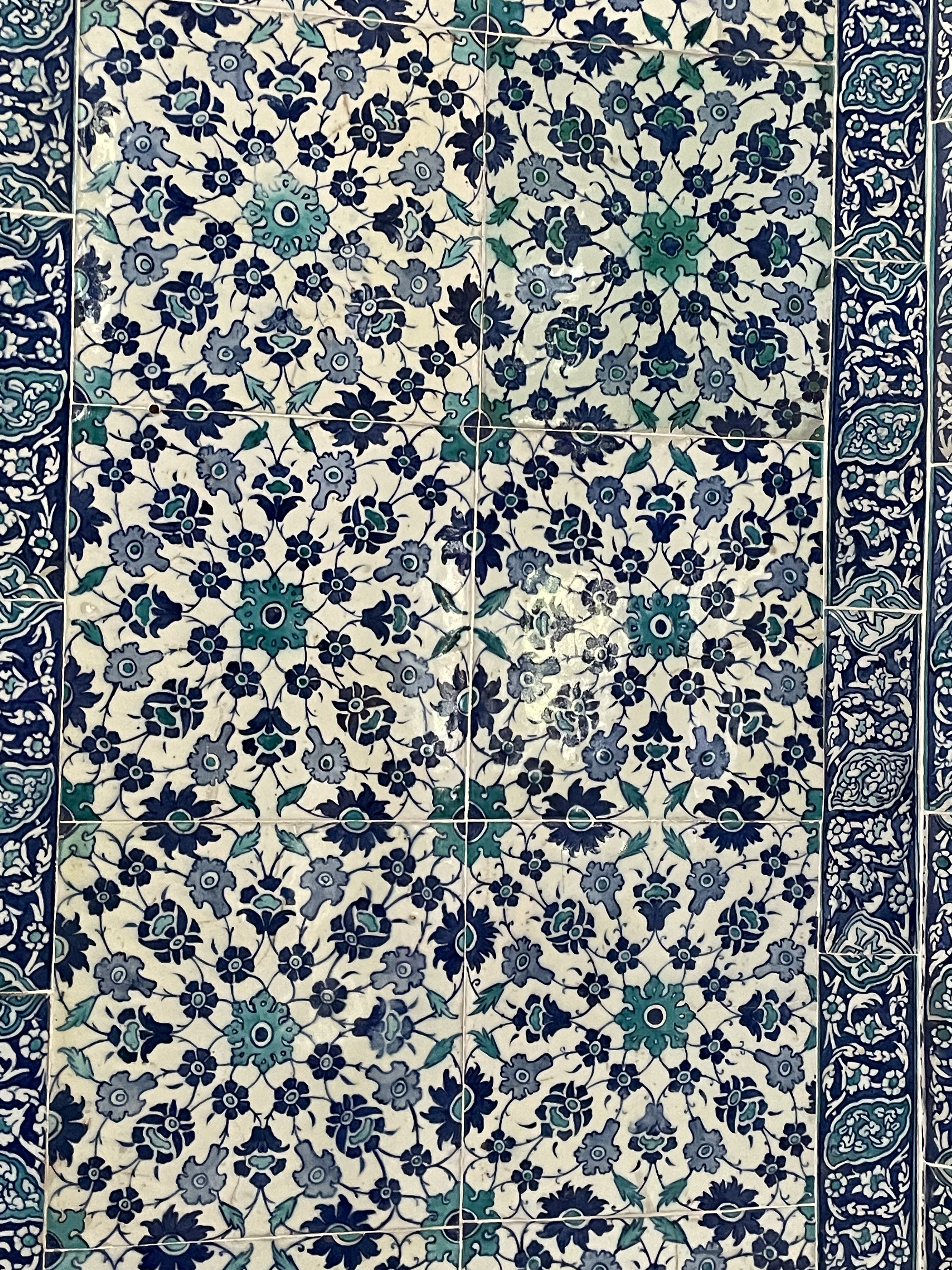
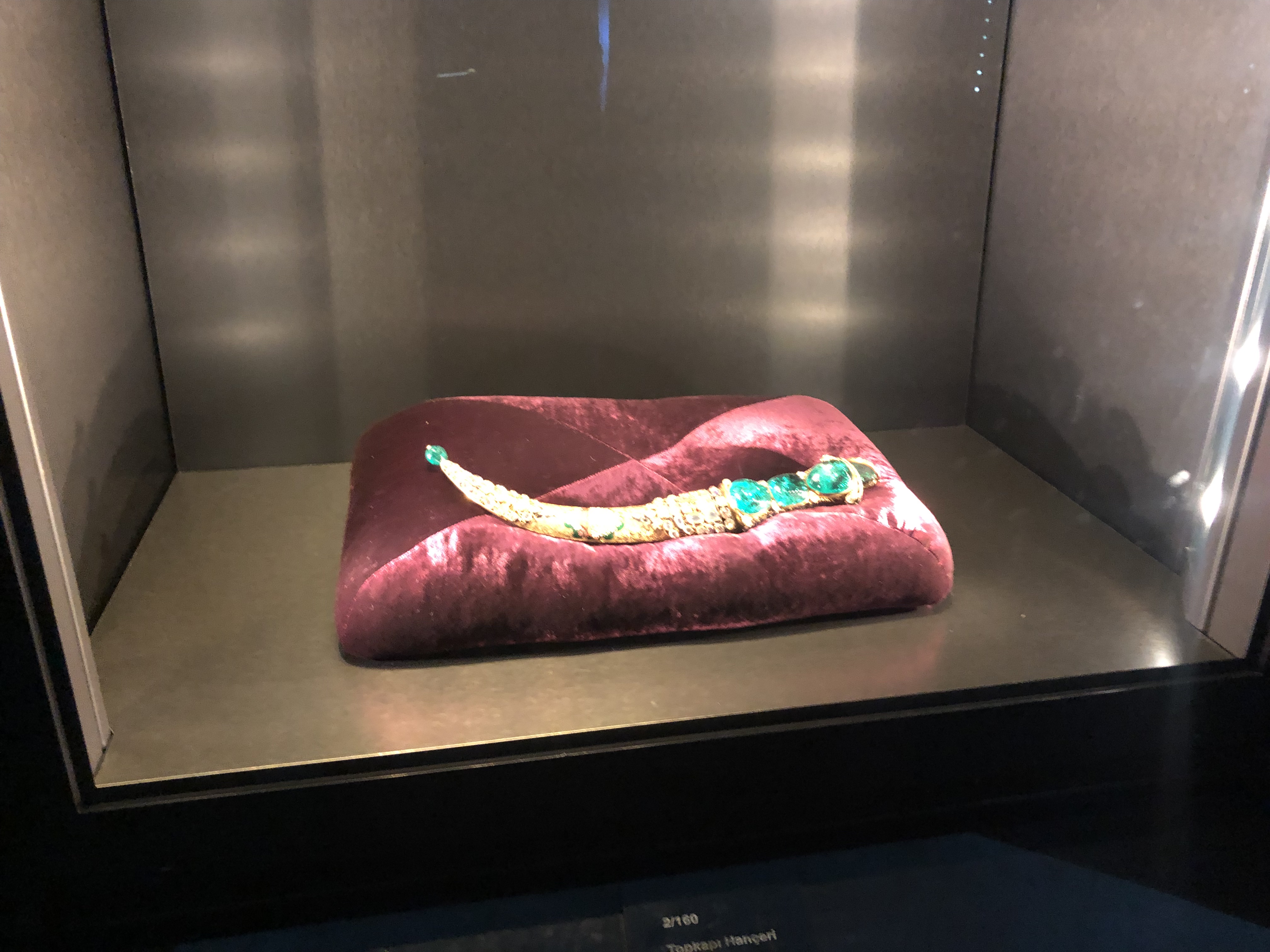
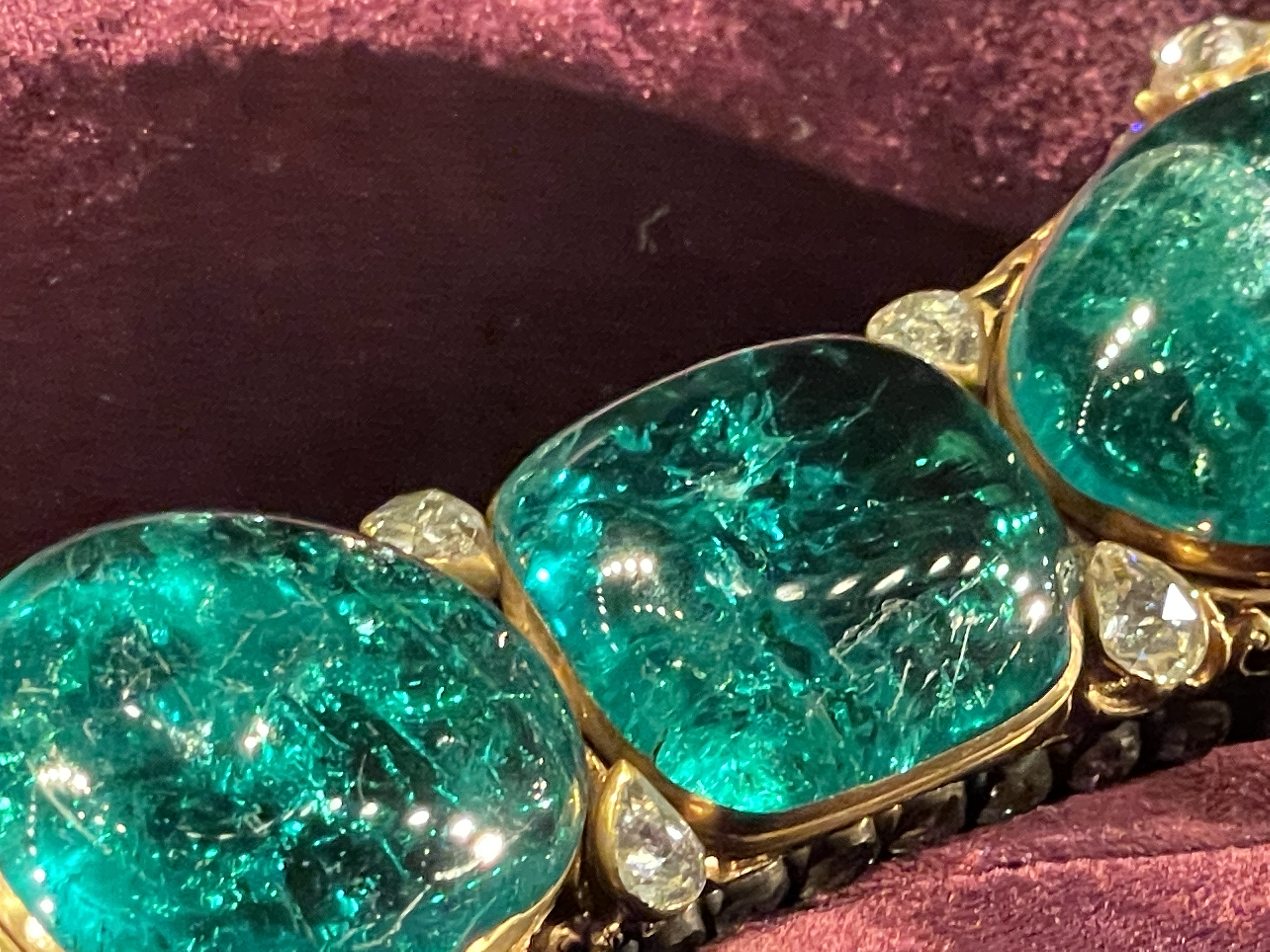
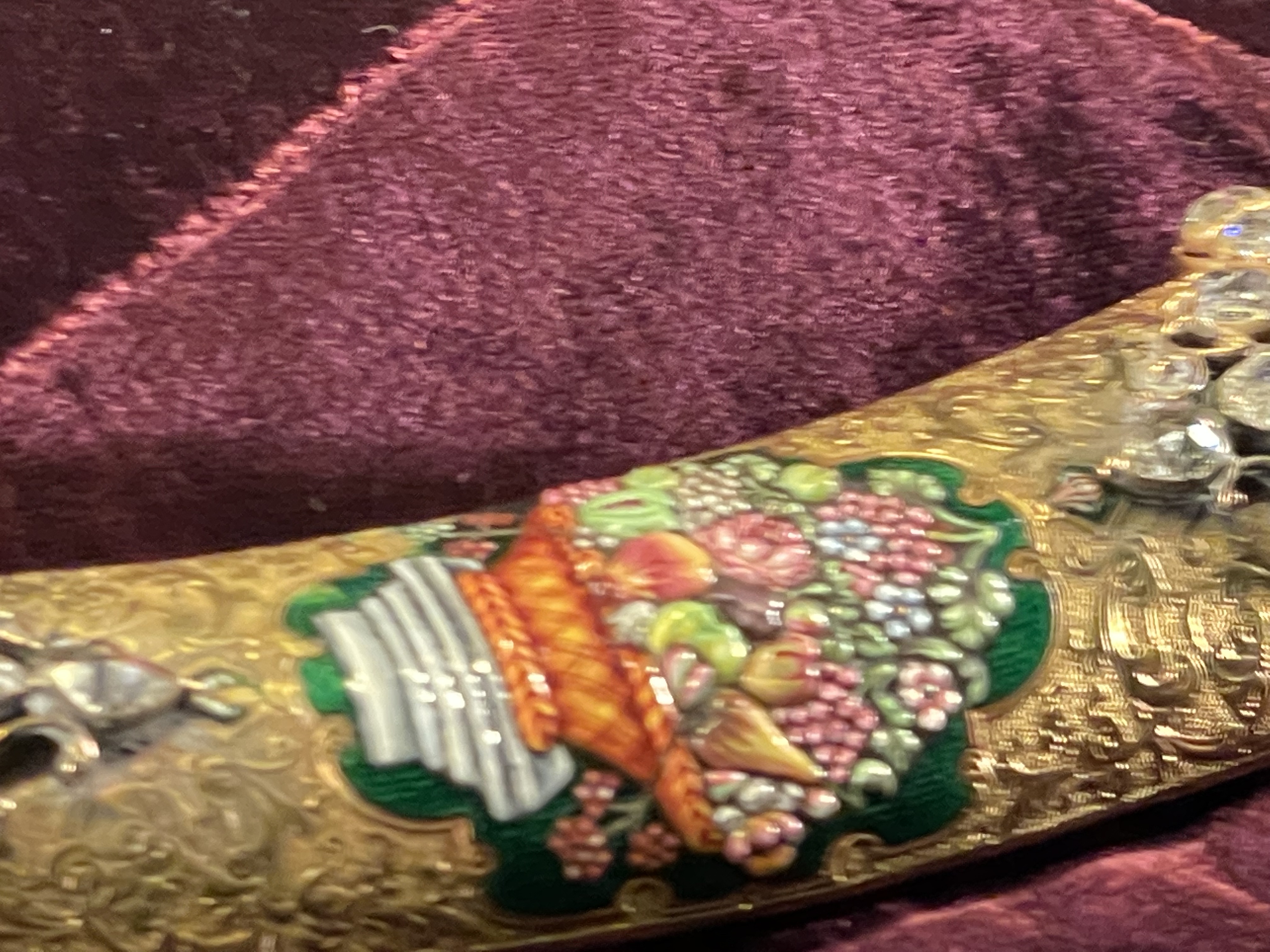
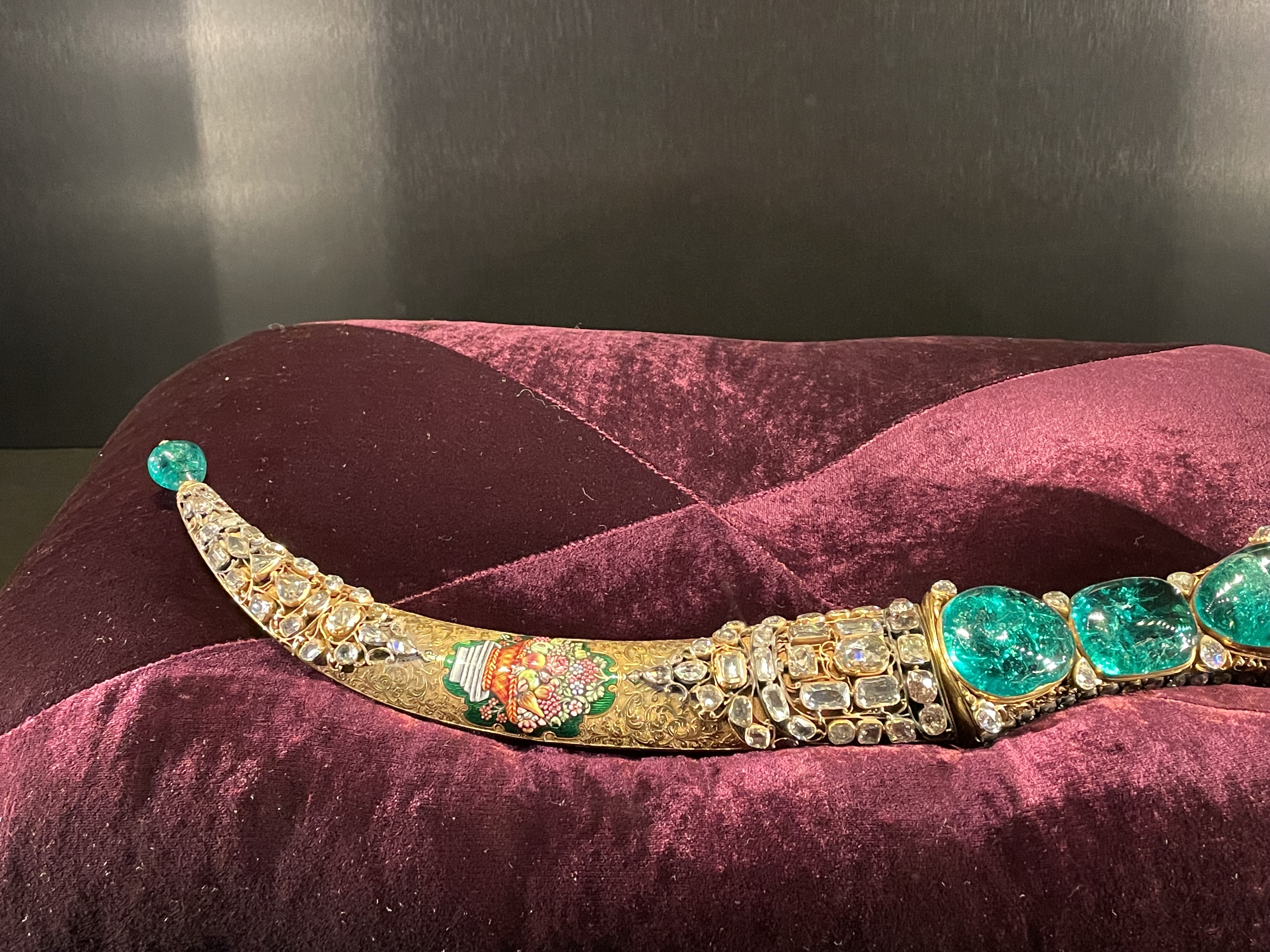
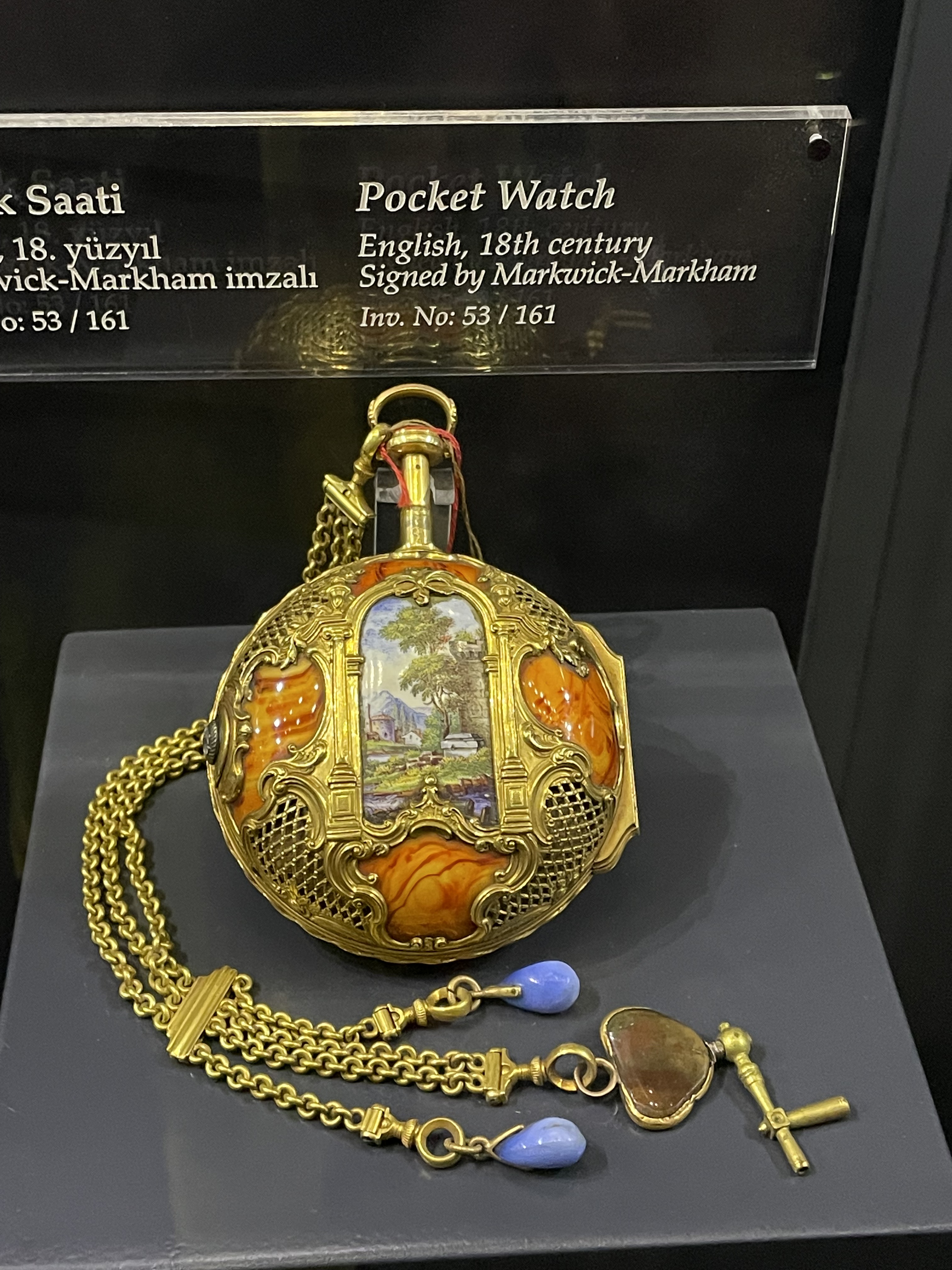
I CAN tell you that these guys were livin’ large. The views are out-of-control, the courtyards make you want to just camp out. The museum has one room of clocks (380 to be exact), that are the work of Ottoman and European clockmakers. Too cool. It also houses the worlds fourth largest diamond in the world, The Spoonmaker’s Diamond, a whopping 86 carats. I took a photo but you can certainly find better ones online. Also the Topkapi Dagger which holds three monster emeralds and lots and lots of diamonds set in the gold. It’s pretty, all righty. The rooms of the palace are typically tile and mosaic as you would expect. Like art in Italy, after a while you just have to soak it in and let it inform your senses, there’s just too much to grasp.
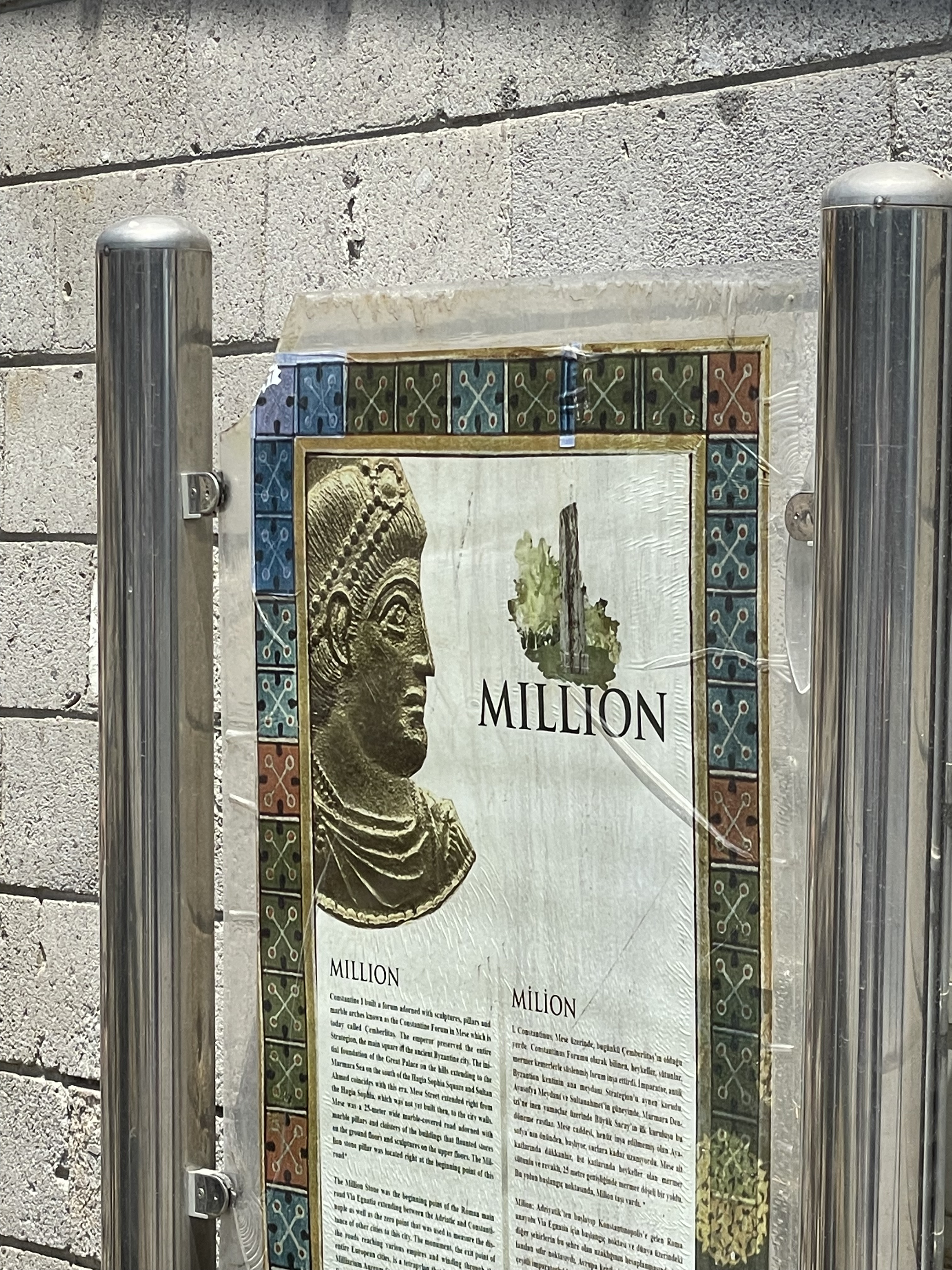
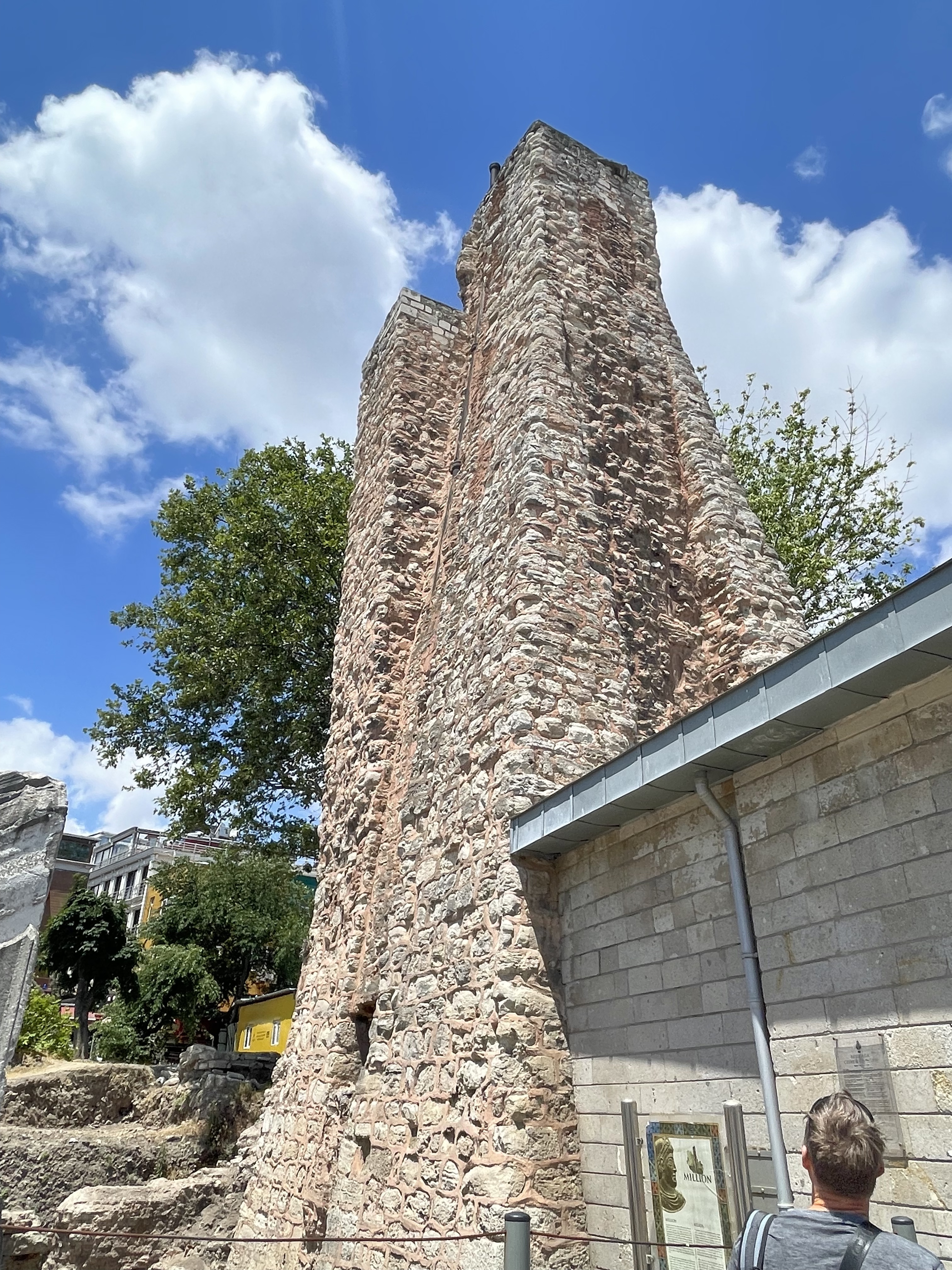
Our tour almost over, we stopped at the Stone of Million, which is an easily overlooked monument from the Byzantine era. It was essentially ground zero mile marker from which distances of all Byzantium cities were measured. It was an arch and all that remains is a monument from fragments that were found under housing in the area. Our guide tells us this is the true meaning of the “all roads lead to Rome” seeing as Constantinople was “new Rome” built by Constantine.
Final stop was the spice market. Walking in is an olfactory delight, but the only thing I bought was saffron. The Grand Bazaar was not open on Sunday which was fine with me. One woman went the night before and said it was uncomfortably crowded. That is not my happy place, so I don’t feel like I missed anything.
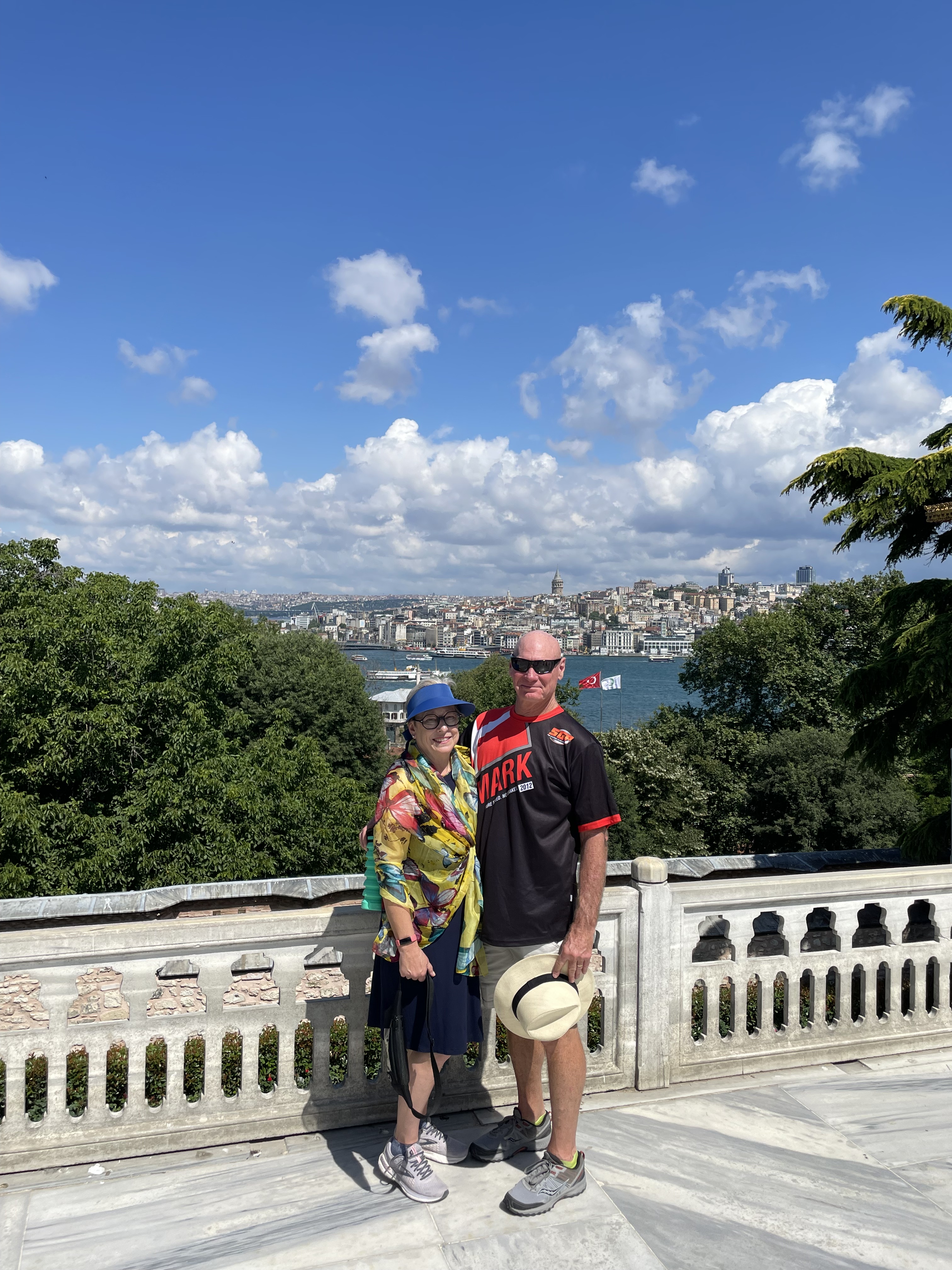
It was a long day, with lots of information. I hope the photos give you an idea of how wonderful it all was. Once again stepping back in time and all the confusion and change and humanity that it teaches.Here are lots of photos to make up for my inability to describe it all…







 Favorite Philosopher's Blog
My heartfelt congratulations on your forty years. As an aside, were I any younger than my three score and ten years, I would be very worried for silly country. As it is, I’ve become simply too old to give a shit.
Sent from my Samsung Galaxy , an AT&T LTE smartphone
I’m too old to give a shit, too, and hanging out with the ancients just made me realize that even if I did give a shit, it doesn’t mean shit to a tree in the grand scheme of the universe. Fighters gonna fight fight fight fight fight…..